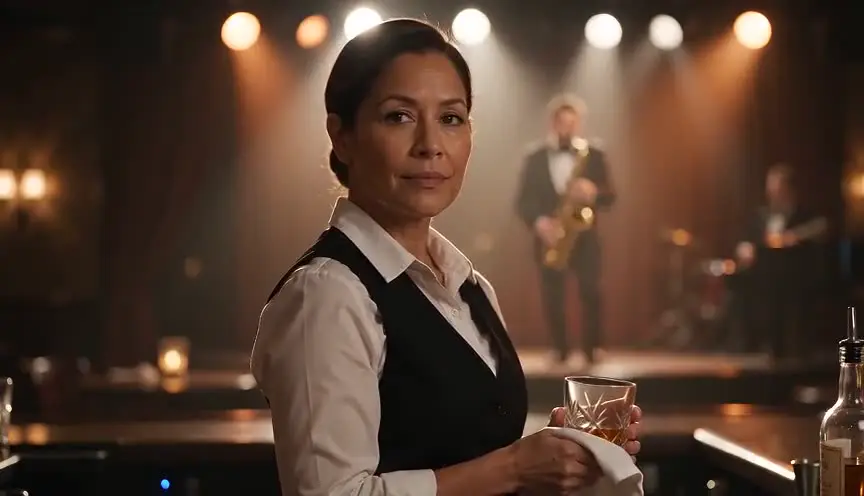
A character looks straight into lens and says, “You think you know what happened. You don’t.”
Then we cut back into dramatized events that contradict the testimony we just heard.
That can be electric.
It can also be a structural mess if interview sections are formatted like random monologues dropped between scenes.
Writers increasingly blend documentary devices into narrative films: interview setups, archival-feeling testimonies, confessional camera addresses, faux-doc framing inside fiction. Real documentaries treat those same setups differently, as the documentary storyboard sets out. Done well, this hybrid form creates irony, layered truth, and tonal precision. Done poorly, it looks like two separate movies stapled together.
Here’s why that matters: once you introduce documentary interview grammar into a narrative script, readers need immediate orientation on source, timeline relationship, and reliability context. Without that, they spend energy decoding format instead of following story tension.
A documentary interview inside narrative cinema is not a gimmick.
It is a structural contract.
Think about it this way: every interview line is testimony under implied editing. That means each line carries both content and framing bias.
If your formatting makes that bias legible, the hybrid works.
Free tool: use the Slugline Formatter to clean up and standardize your scene headings.
Cinematic workflow frames

These two visuals work as a pair: the first shows Cinematic workflow still, first angle, 35mm film grain, and the second shifts to Cinematic workflow still, second angle, 35mm film grain - compare them briefly, then move on.

What This Hybrid Form Actually Is
A documentary interview element inside a narrative film script usually includes one or more of these core components: direct address to an unseen interviewer, testimonial framing that situates the speaker as witness or participant, present-tense reflection on past events, and often a visual or spatial separation from the main diegetic action—achieved through lighting, backdrop, or screen direction cues that mark the interview as a distinct mode of storytelling.
formal sit-down interview setup,
diegetic interview by unseen questioner,
mockumentary confessional address,
retrospective witness testimony,
interview fragments intercut with dramatized scenes,
contradictory multi-witness memory structure.
These modes are related but not identical.
The key craft problem is controlling perspective authority.
Who is speaking?
When are they speaking relative to events?
How much does the film want us to trust them?
How does dramatized action confirm or undermine testimony?
In hybrid scripts that weave documentary interview segments into narrative fiction, formatting clarity is not technical housekeeping or cosmetic convention—it is narrative ethics, because readers, directors, and actors must instantly recognize which reality layer they occupy, which voice is speaking, and whether the character knows they are being watched, ensuring that tonal shifts land with precision and that the documentary intrusion does not blur into the fictional world by accident.
Core Formatting Patterns That Work
There is no single mandatory standard governing how documentary interview passages must appear on the page, but consistency within a single script and clear source labeling—whether through sluglines that name the interview setting, parentheticals that specify TO CAMERA, or dedicated formatting such as indented blocks or italicized attribution—are critical to preserve the integrity of the hybrid structure and guide every collaborator through the intended narrative architecture.
Pattern 1: Dedicated Interview Scene Headings
INT. DOCUMENTARY INTERVIEW SET - DAY
Then character cue and testimony.
Strong for clear context and repeatable structure.
Pattern 2: INTERCUT Testimony with Dramatized Action
Set both documentary interview sources and narrative intercut sequences intentionally, deploying the contrast only when juxtaposition drives meaning—when testimony must interrogate action, when memory must fracture the present, or when a character's spoken account must betray or amplify what the audience has already witnessed, transforming format into a storytelling engine rather than a decorative flourish.
Useful for irony and contradiction beats.
Pattern 3: On-Camera Address Labels
MARA (TO CAMERA)
Documentary interview formatting proves especially useful in mockumentary textures, where characters perform awareness of the camera and the interview conceit fuels comedy or satire, and in confessional intrusions within dramatic narratives, where a sudden pivot to direct testimonial address can puncture emotional distance, expose interior contradiction, or grant a character the dignity of self-narration in a moment when the fictional frame alone cannot carry the weight of truth.
Pattern 4: Question Prompts as Structural Beats
You may include OFF-CAMERA INTERVIEWER prompts sparingly when they shape answer trajectory.
Do not overuse Q&A formatting like a transcript unless stylistically essential.
Comparison Table: Hybrid Interview Styles
| Style | Best Use Case | Strength | Risk |
|---|---|---|---|
| Formal sit-down headings | Investigative or retrospective narratives | Clear source and timeline anchor | Can feel static if overlong |
| Intercut testimony + action | Contradiction/reveal structures | High dramatic irony | Confusion if switches lack rhythm logic |
| Confessional camera address | Character-driven tonal shifts | Direct intimacy and voice | Overuse breaks immersion |
| Transcript-like Q&A blocks | Legal/procedural authenticity | Precise framing control | Readability drag and pacing loss |
Three Beginner Scenarios That Commonly Fail
Scenario 1: The “Random Talking Heads” Problem
Interview inserts appear without setup, location cues, or tonal relation to surrounding scenes.
Result: fragmented reading experience.
Fix: establish repeatable interview container and clear transition logic. 建立可复用的采访容器结构,并明确场景切换的逻辑规则,确保读者始终能判断当前处于采访叙述还是戏剧化重现。 建立可复用的采访容器结构,并明确场景切换的逻辑规则,确保读者始终能判断当前处于采访叙述还是戏剧化重现。
Scenario 2: Over-Transcripted Pages
Writer formats long Q&A exchanges verbatim, minimizing scene progression. 作者以逐字逐句的问答形式呈现冗长对话,导致场景推进停滞,叙事节奏被采访问答的机械重复拖慢。 作者以逐字逐句的问答形式呈现冗长对话,导致场景推进停滞,叙事节奏被采访问答的机械重复拖慢。
Result: screenplay pace stalls.
Fix: compress prompts, prioritize answer beats with narrative consequence.
Scenario 3: Contradiction Without Design
Interview says one version, dramatized scene shows another, but no clear intention behind mismatch. 采访中陈述的版本与戏剧化场景里展示的情节相互矛盾,却未通过叙事手法揭示这种不匹配背后的创作意图或故事功能。 采访中陈述的版本与戏剧化场景里展示的情节相互矛盾,却未通过叙事手法揭示这种不匹配背后的创作意图或故事功能。
Result: reader reads inconsistency as error.
Fix: decide whether mismatch signals lie, memory distortion, bias, or editing manipulation and format accordingly. 明确不匹配究竟在暗示说谎、记忆扭曲、叙述者偏见,还是剪辑操纵,并相应调整格式设计——例如用时间戳、旁白注释或视觉差异来强化这一叙事意图。 明确不匹配究竟在暗示说谎、记忆扭曲、叙述者偏见,还是剪辑操纵,并相应调整格式设计——例如用时间戳、旁白注释或视觉差异来强化这一叙事意图。
Step-by-Step Workflow for Documentary-Interview Integration
Step 1: Define Interview Function in Story Engine
What does interview material do here?
frame events,
misdirect,
confess,
correct false narrative,
expose unreliability,
deliver emotional context.
If function is unclear, interview likely ornamental.
Step 2: Lock Temporal Relationship
Is interview contemporaneous, retrospective, or ambiguous by design? 采访是与事件同步进行的、事后回溯的,还是刻意保持时间模糊以制造叙事张力?需在文本或格式层面给出明确信号或设计暗示。 采访是与事件同步进行的、事后回溯的,还是刻意保持时间模糊以制造叙事张力?需在文本或格式层面给出明确信号或设计暗示。
Mark this in scene structure so readers can track chronology.
Step 3: Choose Source Labeling Rules
Set consistent cues:
INTERVIEW SET,
TO CAMERA,
OFF-CAMERA INTERVIEWER.
Use one stable system across script.
Step 4: Build Testimony-Action Contrast Map
List where testimony and dramatized action align or conflict.
Each conflict should change audience interpretation, not just repeat information.
Step 5: Control Insert Length and Frequency
Interview beats should punctuate, not flood.
Long blocks need internal reversals.
Short blocks need strong consequence linkage.
Step 6: Use Cutaway Logic Deliberately
If you cut from testimony to dramatized contradiction, make transition beats clear.
Transition should transfer energy, not reset tone.
Step 7: Run Reliability Pass
Ask for each interview speaker:
What do they want audience to believe?
What are they hiding?
What does scene evidence reveal anyway?
If this is vague, hybrid structure weakens.
Body Image: Testimony vs Event Contrast Grid

The Trench Warfare Section: What Beginners Get Wrong and Exact Fixes
This is where hybrid scripts usually fail.
Failure 1: No Source Container
Interview lines appear without formal context.
Fix: use clear heading/cue system for every interview entry.
Failure 2: Interview Monologues as Info Dump
Long exposition blocks with minimal dramatic movement.
Fix: break with contradictions, reveals, or behavioral pivots — moments where what a character says collides with what they do, where hidden truth surfaces, or where their course of action suddenly reverses.
Failure 3: Identical Voice Across Interviewees
Every talking head sounds like the writer.
Fix: define unique rhetorical rhythm per speaker.
Failure 4: Contradiction Treated as Style, Not Meaning
Mismatches occur without narrative purpose.
Fix: map each mismatch to specific reliability question.
Failure 5: Confused Timeline Anchors
Reader cannot tell when interview is happening.
Fix: anchor temporal relationship early and consistently.
Failure 6: Overuse of Off-Camera Questions
Q&A format dominates page.
Fix: keep interviewer prompts minimal and strategic.
Failure 7: Tonal Whiplash Between Modes
Interview tone and dramatized tone feel from different films — the testimonial voice carries one emotional register or pacing, while the enacted scenes pull from another cinematic language entirely, creating tonal dissonance.
Fix: design tonal bridges in transitions.
Failure 8: No Character Consequence to Testimony
Interview content does not alter live narrative pressure.
Fix: tie testimony beats to immediate reinterpretation or action — ensure that each confessional moment directly triggers a shift in how we read the next scene, or prompts a character to act, so the interview doesn't float separately from the drama.
Failure 9: Formatting Drift Across Draft
TO CAMERA, INTERVIEW, CONFESSIONAL used inconsistently.
Fix: normalize terms in final pass.
Failure 10: Ending Leaves Interview Device Unresolved
Hybrid device introduced but not paid off structurally.
Fix: resolve framing logic by final act.
A documentary insert should either sharpen truth or sharpen uncertainty — it must clarify what really happened, or deepen the ambiguity and make us question the narrative further. If it does neither, cut it.
Advanced Craft: Framing Bias as Character Weapon
In documentary-style interviews, characters perform for an implied future audience — they curate their self-presentation, anticipate judgment, or shape their legacy in real time. That performance itself, the gap between their curated testimony and their lived behavior, is story material.
A witness can sanitize guilt through language.
A villain can curate remorse.
A victim can reclaim agency by refusing neat chronology.
An institution can hide liability in passive voice.
These are not dialogue flourishes or stylistic choices. They are power behaviors that shape the interaction itself.
When you format interview sections clearly with explicit structural markers, readers can track not just what is said, but how narrative control is being contested and who holds authority at each turn.
You can also engineer escalating reliability collapse:
Interview Beat 1: plausible certainty.
Beat 2: subtle omission.
Beat 3: visual contradiction.
Beat 4: overt self-protection.
Beat 5: forced admission or framing breakdown.
This arc turns testimony into plot engine that drives the narrative forward rather than commentary layer that merely decorates it.
Try it free
Try 熙熙 for free on your script
It is free. Import your existing project, get a clearer view of your outline, and regain control of your story structure in minutes.
Start FreeWorkflow and Revision Discipline
Hybrid interview scripts become brittle in rewrites when label drift and chronology shifts creep in, causing speakers to blur and timelines to misalign across drafts.
Maintain a testimony ledger:
speaker,
interview timeline position,
claim,
contradicting evidence,
audience takeaway shift.
Then validate every insert against this ledger in final pass to catch inconsistencies before they propagate.
Search for cue variants (TO CAMERA, INTERVIEW, OFF CAMERA) and normalize.
Read only interview sections consecutively: do they tell a coherent rhetorical story?
Then read only dramatized contradiction beats: do they produce cumulative reinterpretation?
For produced hybrid storytelling references, the <a href="https://www.scriptreaderpro.com/screenplays/" rel="nofollow">Script Reader Pro screenplay collection</a> can provide comparative pacing examples, but your internal source logic and reliability design should govern format decisions.
As discussed in our guide on [how to write a news anchor scene in screenplay format], mediated voices must have clear authority framing to remain legible.
If your interview testimony is cut against surveillance or archival evidence, pair with [screenplay formatting for surveillance camera footage] to keep source channels distinct.
And if testimony triggers split-location action, [how to show simultaneous action in two locations in a script] helps preserve timeline clarity under intercut pressure.
Body Image: Reliability Collapse Ladder

YouTube Placeholder
[YOUTUBE VIDEO: A practical rewrite of a messy hybrid interview sequence into a clean testimony-versus-action structure with clear formatting and escalating reliability tension.]
Before-and-After Micro Example
Before:
“INT. LIVING ROOM - DAY
Mara talks about what happened.
MARA I told him not to go there.
Then we see him going there.
MARA I did everything I could.
He gets hurt.”
Conceptual contradiction exists, but structure is unclear.
After:
“INT. DOCUMENTARY INTERVIEW SET - DAY
MARA (TO CAMERA) I told him not to go.
INTERCUT WITH:
EXT. FACTORY LOT - NIGHT (FLASHBACK)
Mara hands him the keycard.
BACK TO INTERVIEW SET
MARA (TO CAMERA) I did everything I could.
INTERCUT WITH:
EXT. FACTORY LOT - NIGHT
She watches him enter. Does not call for help.”
Same premise.
Now it has intentional framing, contradiction logic, and cumulative meaning that builds across scenes.
Ending Perspective: Format the Testimony, Stage the Truth Fight
A documentary interview inside a narrative film can deliver extraordinary depth when it is treated as a power device, not a stylistic flourish—it reframes what we just watched and assigns motive to action.
Readers should always know who is speaking, when they are speaking, and why their version matters in this particular moment of the story.
From there, you can manipulate reliability with precision.
Use clear containers.
Control intercut rhythm.
Map contradiction meaning.
Track source consistency.
Pay off framing logic by the end.
Do this, and interview inserts stop feeling like explanatory interruptions or exposition patches.
They become active battlegrounds where truth, memory, and self-preservation collide on the page, each speaker shaping the past to justify the present.
One further layer can elevate hybrid interview writing from solid to exceptional: editorial intent operating as invisible character—a presence felt through structure rather than stated outright.
In documentary-inflected storytelling, the cut itself argues, advancing thesis through sequence and rhythm as much as through spoken word.
Which sentence is included?
Which pause is removed?
Which contradiction is juxtaposed immediately, placed within the same beat, and which is delayed by a full scene or withheld until act two?
Even if your script does not explicitly depict an editor as on-screen figure, your formatting choices—your beat breaks, your transition cues, your parenthetical asides—imply an editorial stance, a curatorial voice shaping what the audience sees and when. Lean into that intentionally. If the film wants to question testimony, cut fast from claim to contradiction, denying the speaker time to settle into authority. If the film wants ambiguity, create slight delay and let audience sit in uncertainty before visual correction arrives, allowing discomfort to accumulate.
This is not post-production thinking deferred to the cutting room. It is page-level narrative design, embedded in the script from the first draft.
Another advanced strategy is “bias layering by witness order.”
Who speaks first sets baseline credibility.
If the first interviewee sounds confident and coherent, later contradictions hit harder. If the first voice is unstable, audience may distrust everyone too early. Ordering interviews is therefore structural leverage, not logistics.
You can design a deliberate reliability arc across interview sequence blocks:例如从高可信度证人开场建立anchor认知,中段引入矛盾证词制造张力,末尾再以关键witness推翻或重组前述框架,形成controlled revelation节奏。
institutional certainty,
personal justification,
trauma-fragmented memory,
forensic contradiction,
reframed truth.
This kind of progression helps readers feel cumulative reinterpretation rather than episodic talking heads—观众体验到的不是平铺直叙的声音拼贴,而是layer by layer叠加的认知重构,每段新证词都retroactively reframe之前的片段,产生持续的意义增殖。
Practical Drill: Claim-Evidence Pairing Pass
For each interview line with factual claim, write the corresponding evidence beat elsewhere in script:采访中每个具体断言(日期、地点、金额、third-party name)都应在script其他位置布设validation节点——可以是archival footage cutaway、on-screen doc close-up、narrator bridging sentence或另一witness的corroborating detail,确保claim不悬空。
If a claim has no evidence partner, decide whether that absence stems from intentional ambiguity—a deliberate rhetorical choice to leave room for interpretation—or from an accidental gap where supporting material was overlooked or never gathered.
If many claims float unpaired across the document, the hybrid structure risks becoming rhetorical haze: readers lose the thread between assertion and substantiation, and the intended analytical architecture dissolves into opacity.
Practical Drill: Reliability Temperature Map
Assign each interview beat a temperature score ranging from 1 (highly reliable, corroborated, or disinterested testimony) to 5 (highly self-serving, uncertain, or contradicted by other sources), so that each passage carries a legibility marker for its evidential weight.
Then map score progression across acts.
If the temperature score never changes—remaining at a constant level throughout the testimony layer—that monotone may signal that the entire interview stratum feels static, lacking the natural variation in credibility and perspective that characterizes real human accounts.
If it fluctuates randomly with no apparent pattern or rationale tied to the content, readers may interpret the inconsistency as draft noise—arbitrary variation left over from an editing pass—rather than as a meaningful signal about the reliability gradient of the material.
Aim for intentional modulation.
Practical Drill: Off-Camera Prompt Compression
Take one interview-heavy sequence and remove 50% of interviewer prompts.
If meaning survives, keep the compressed version. If meaning collapses, rewrite answers to carry implied question context.
This keeps pages lean while preserving rhetorical clarity.
Practical Drill: Contradiction Timing Test
Rewrite one key contradiction scene in two versions:
Version A: immediate contradiction (intercut instantly).
Version B: delayed contradiction (one scene later).
Compare emotional effect. Immediate contradiction emphasizes deception detection. Delayed contradiction emphasizes interpretive unease and retrospective re-reading. Choose based on your story’s tension strategy.
One more high-value technique is testimonial language drift.
A character may begin interviews in polished legal-safe phrasing, then shift into fragmented personal speech as pressure mounts.
Another may do the opposite: start messy, then adopt rehearsed wording after consultation.
These shifts in perspective across different interview moments can reveal underlying patterns of manipulation, psychological fear responses, or genuine character growth without requiring explicit verbal declaration from subjects.
Capture them deliberately in cue-to-cue wording changes.
Operationally, maintain a “truth delta” ledger in revisions:
what audience believes before interview beat,
what interview claims,
what evidence confirms/contradicts,
what audience should believe after beat.
If the delta measurement registers as zero repeatedly across multiple interview insertions, those particular interview segments are probably offering redundant information that does not advance the viewer's understanding.
If delta spikes without setup, audience may feel cheated.
Balanced deltas create sustained engagement.
Finally, remember that documentary interview devices embedded inside narrative films carry unique power precisely because they invite viewers to adopt the role of active analysts rather than remain as passive spectators. Your formatting architecture should actively support that participatory dynamic by making both source attribution and underlying structure transparent and legible while simultaneously preserving the moral complexity and ambiguity inherent in testimonial accounts.
When done right, these scenes do not pause the movie.
They deepen and enrich the philosophical argument the movie is ultimately making about the contested nature of truth itself.
One last pragmatic lens can save you from common production-stage collapse: interview payload budgeting.
In many drafts, writers front-load interviews with too much explanatory value, then discover Act Two and Act Three have weaker revelation capacity because “truth inventory” was spent too early. To prevent this, budget interview payload the same way you budget plot reveals.
Early interviews should frame questions and assumptions.
Midpoint interviews should destabilize assumptions.
Late interviews should reframe motive, responsibility, or consequence at a deeper level.
If interviews at different stages all perform the same explanatory function, hybrid form starts to feel repetitive.
Another strategic move is contradiction scaling.
Small contradiction first (date mismatch).
Medium contradiction next (sequence mismatch).
Major contradiction later (intent mismatch).
Escalating contradiction types keeps audience re-evaluating without numbing them through constant maximal twists.
Practical Drill: Payload Distribution Chart
Build a chart with three columns:
Interview beat,
new information delivered,
narrative cost generated.
If an interview adds information but no cost, consider trimming or relocating. In hybrid scripts, information without cost often reads like documentary filler instead of drama.
Practical Drill: Motivation Echo Pass
After each interview insertion, add one nonverbal action beat in the surrounding narrative scene that echoes or undermines the testimony motive.
This keeps interview content embodied in story world and prevents “floating commentary” syndrome.
Practical Drill: Trust Recalibration Test
At three points in your script (early, midpoint, late), ask test readers one question:
“Whose version do you currently trust most, and why?”
If answers are identical across all three points, your reliability arc may be too static.
If answers shift for intentional reasons, your interview structure is likely working.
From a workflow perspective, freeze your interview label vocabulary early and resist creative synonyms late in draft. “Interview,” “to camera,” “confessional,” and “statement” might feel interchangeable in your head; on the page, inconsistency introduces friction exactly where you need trust.
If you handle all that well, hybrid interview form becomes a multiplier: more perspective, more irony, more emotional precision, with less expository drag.
Final Step
Build your next script with 熙熙
Move from ideas to production-ready pages faster with timeline-native writing and AI-assisted story flow.
Try 熙熙