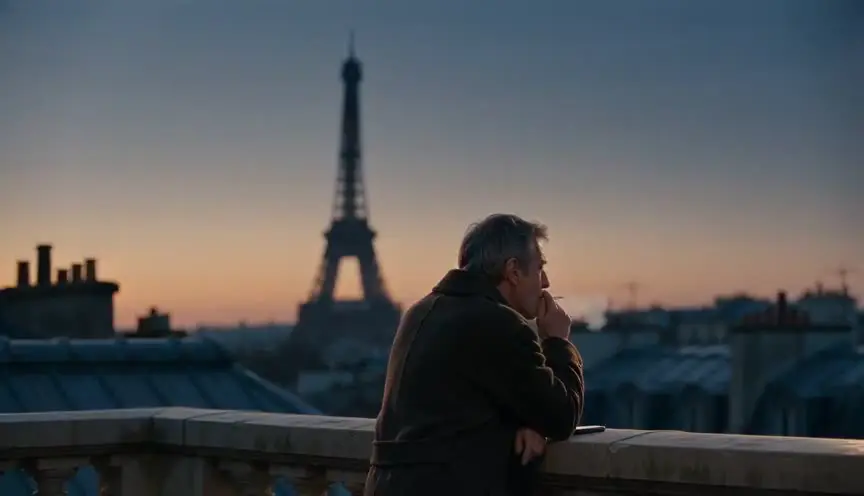
The camera follows Marcus through the kitchen door, past the sous chefs shouting orders, around the corner where a waitress narrowly avoids collision, into the dining room where a couple argues at table seven, out the front door to the street where rain is falling, and comes to rest as Marcus lights a cigarette under the awning.
One take. No cuts. A oner.
Writing a continuous shot is tricky. You want to convey the unbroken flow, the virtuosity, the choreography, the building tension that comes from no escape into editing. But you also don't want to clutter the page with camera directions that aren't your job to write. You're the screenwriter, not the director or DP.
The challenge: How do you suggest the oner without being prescriptive? How do you write a single unbroken action without it reading like a technical manual? 核心在于通过场景内部的连续动作流、空间关系和角色视线引导摄影机移动,而非直接标注镜头指令。 核心在于通过场景内部的连续动作流、空间关系和角色视线引导摄影机移动,而非直接标注镜头指令。
Free tool: use the Slugline Formatter to clean up and standardize your scene headings. 这个工具可以快速规范化你的场景标题格式,确保符合行业标准。 这个工具可以快速规范化你的场景标题格式,确保符合行业标准。
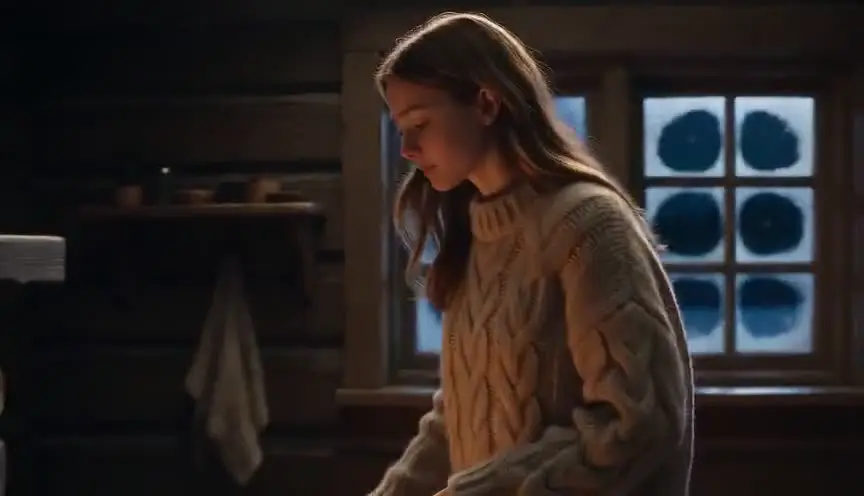
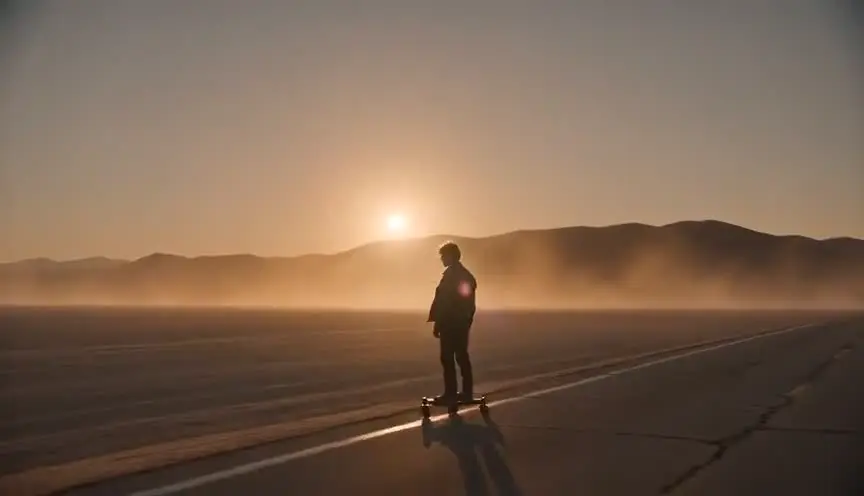
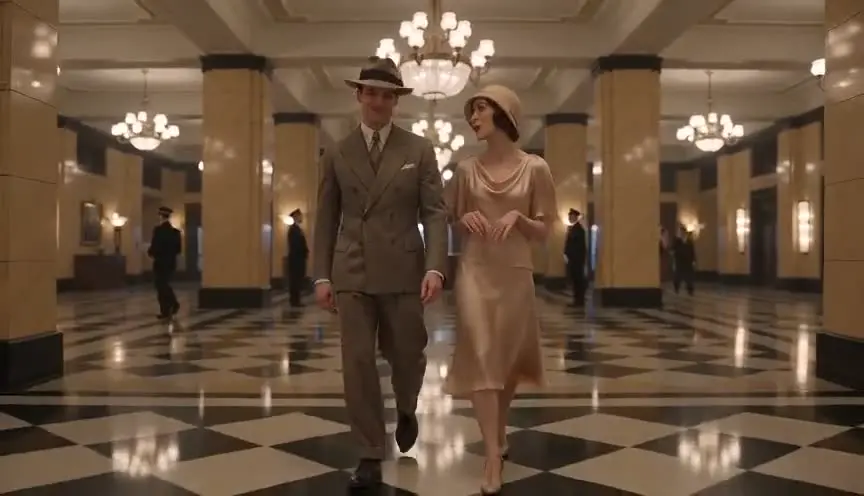
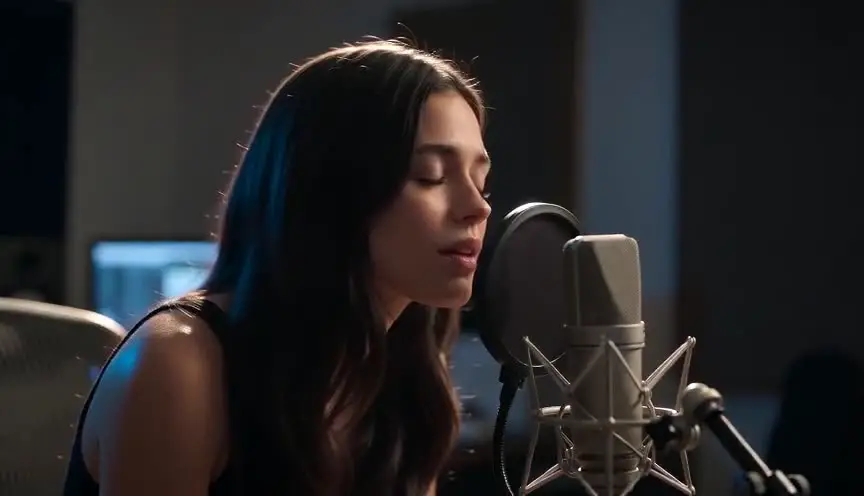
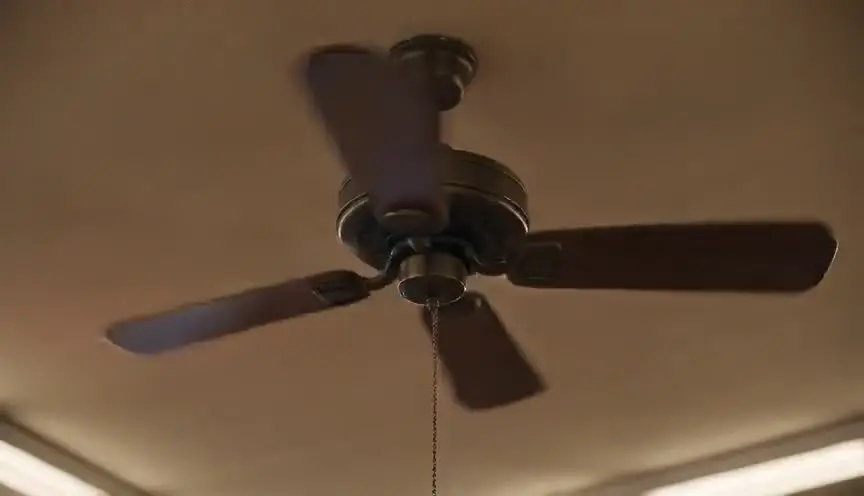
Cinematic workflow frames

These two visuals work as a pair: the first shows Cinematic workflow still, first angle, 35mm film grain, and the second shifts to Cinematic workflow still, second angle, 35mm film grain - compare them briefly, then move on. 两个角度展示同一场景在连续镜头中的空间关系与视觉连贯性。 两个角度展示同一场景在连续镜头中的空间关系与视觉连贯性。

When to Write a Oner
Not every long scene needs to be a oner. The continuous shot is a specific tool with specific effects: 它适用于特定叙事目的,过度使用会削弱其独特价值,需要根据场景的情感节奏和叙事功能来选择。 它适用于特定叙事目的,过度使用会削弱其独特价值,需要根据场景的情感节奏和叙事功能来选择。
Builds tension. Without cuts, there's no release. The audience can't escape. Time feels real. 连续镜头让观众与角色共享同一时间流,剥夺了剪辑带来的心理缓冲,强化了沉浸感和紧迫感。 连续镜头让观众与角色共享同一时间流,剥夺了剪辑带来的心理缓冲,强化了沉浸感和紧迫感。
Creates immersion by sustaining an unbroken visual thread. The continuous perspective directly mirrors how we perceive lived experience moment-to-moment, allowing the audience to follow the action as if physically present within the scene itself.
Showcases choreography with undeniable authenticity. Whether capturing action sequences, dance routines, or any form of physical performance, the oner provides irrefutable proof that what unfolds on screen is genuinely happening in real time before the camera.
Reveals spatial relationships with clarity and depth. By moving fluidly through an environment without the interruption of cuts, the technique demonstrates precisely how different spaces, rooms, and areas connect to one another within the physical geography of your location.
If your scene doesn't organically require these specific cinematic effects, traditional cuts and standard coverage might ultimately serve your storytelling better. But when circumstances demand the oner's unique dramatic power and you recognize that need, you absolutely need to understand how to write it effectively on the page.
The Problem: Camera Directions in Specs
Here's the tension: In a spec script, you're not supposed to direct. "CAMERA FOLLOWS" or "WE TRACK" or "IN A SINGLE SHOT" are considered overstepping. Readers notice. Coverage analysts roll their eyes.
But a oner without any clear textual indication on the page reads exactly like conventional cuts to most readers. The reader will mentally insert editorial breaks wherever paragraph divisions appear, failing to grasp the continuous flow you intend, instead imagining standard coverage with typical shot-reverse-shot construction.
So the question becomes: How do you imply the oner without directing? How do you make the reader feel that unbroken movement across space and time, that signature flow of a single continuous take, all while staying within the bounds of screenwriting format and action description? How do you make the reader feel that unbroken movement across space and time, that signature flow of a single continuous take, all while staying within the bounds of screenwriting format and action description?
The trick is writing action that cannot be cut, where the flow itself is the story. You build momentum through syntax and structure so that any editorial break would destroy the rhythm you've established. The continuity lives in the prose, not in a camera instruction. You build momentum through syntax and structure so that any editorial break would destroy the rhythm you've established. The continuity lives in the prose, not in a camera instruction.
Technique #1: The Unbroken Paragraph
The most elegant approach: Don't break the paragraph.
A oner happens in continuous time and space. If your action description flows in one block, no white space, no hard breaks, the reader experiences continuity. Their eye moves without stopping. Time feels unbroken. The absence of paragraph breaks becomes your visual grammar, your way of signaling to the reader that we are staying with this moment, following this character, never cutting away. The absence of paragraph breaks becomes your visual grammar, your way of signaling to the reader that we are staying with this moment, following this character, never cutting away.
Example:
Marcus pushes through the kitchen doors into chaos, the sous chef barking, flames leaping from the grill, a dishwasher dropping a rack of glasses that SHATTERS across the tiles, and he doesn't slow, weaving past the prep station where someone shouts his name, he doesn't answer, through the swinging door into the dining room where the light changes from fluorescent to amber and a couple at table seven is deep in a fight they don't notice him pass, past the host stand and the glass doors to the street where rain is falling and he finally stops, breathes, fumbles for a cigarette.
That's one paragraph. The reader's eye never rests. The continuous sentence mirrors the continuous shot. Every comma propels forward, every clause adds another beat of movement, and the refusal to break keeps us locked into Marcus's trajectory through space. Every comma propels forward, every clause adds another beat of movement, and the refusal to break keeps us locked into Marcus's trajectory through space.
Technique #2: Fluid Action Transitions
If you need paragraph breaks because the action sequence runs long, use transitional language that implies continuous movement and spatial flow without signaling cuts—phrases that carry the camera forward through thresholds, around corners, or across rooms in real time.
Words that suggest continuation:
- "...and"
- "...into"
- "...where"
- "...as"
- "...still moving..."
- "...doesn't stop..."
- "...keeps walking..."
Words that suggest cuts (avoid in oners):
- "Meanwhile"
- "At the same time"
- "We see"
- "Cut to"
- "Elsewhere"
The language cues the reader to stay with the motion.
A Table: Cut Language vs. Continuity Language
| Cut Language | Continuity Language |
|---|---|
| Meanwhile... | As she... |
| We see... | She sees... |
| Elsewhere... | Beyond her... |
| Another room. | Into the next room... |
| (paragraph break) | ...and continues... |
| INT. NEW ROOM | She steps through the door into... |
Technique #3: Embedded Movement Cues
You can suggest camera movement by describing what the audience sees as the character moves. You're describing the experience of following, not directing the camera.
Example:
Sarah walks down the hospital corridor, her footsteps echoing against linoleum. Ahead, a doctor confers with a nurse beside a medication cart; she passes close enough to catch a single word, "terminal", and keeps walking without breaking stride. The walls transition from institutional green to a softer blue as she moves deeper into the wing. A child on a gurney wheels past in the opposite direction, pushed by an orderly in scrubs. The double doors ahead swing open as another orderly approaches from the other side, and Sarah slips through the widening gap before the pneumatic hinges pull them closed again, crossing the threshold into the ICU where machines beep in overlapping rhythms and the air smells faintly of antiseptic.
Notice: No "WE FOLLOW" or "CAMERA TRACKS." But the reader feels the movement because what Sarah sees keeps changing. The environment flows. The eye travels.
Technique #4: The Strategic Scene Heading
Scene headings typically signal cuts—new locations, new moments. But in a oner, you might dispense with them entirely, or use a modified approach that acknowledges continuous space and time rather than fragmentation.
Option A: One heading, long scene.
A single INT. or EXT. heading at the top, then a long continuous action block that flows across thresholds, rooms, and zones. The reader understands it's one unbroken location-experience, one sustained point of view.
Option B: Embedded location shifts.
If the oner moves through multiple spaces:
INT. MARCUS'S APARTMENT – CONTINUOUS
Marcus grabs his coat, moves to the door,
INT. HALLWAY – CONTINUOUS
, and into the dim hallway, past Mrs. Chen's apartment with its door ajar and the blue flicker of a television inside, down the narrow stairs where the banister is sticky under her palm,
EXT. STREET – CONTINUOUS
, to the sidewalk where the morning light is blinding.
The "CONTINUOUS" tag signals no time break. But visually, the repeated headers can fragment the flow. Use sparingly, only when location changes matter for story.
Option C: No intermediate headings.
Just write through the space changes within action:
Marcus grabs his coat and moves to the door, through it, down the hall past Mrs. Chen's place and the smell of frying garlic, down the stairs two at a time, burst onto the sidewalk where morning light is blinding.
This keeps flow intact.

Try it free
Try 熙熙 for free on your script
It is free. Import your existing project, get a clearer view of your outline, and regain control of your story structure in minutes.
Start FreeThe "Trench Warfare" Section: What Goes Wrong
Failure Mode #1: Over-Directing
The script reads like shot list: "WE PUSH IN on Marcus, THEN WE FOLLOW HIM through the door, PANNING RIGHT as he passes the stove..."
How to Fix It: Delete camera language. Rewrite as character action. "Marcus moves through the door, passes the stove." The director will decide the shot.
Failure Mode #2: Breaking the Flow
Frequent paragraph breaks, scene headings, or editorial intrusions ("Meanwhile...") kill the sense of continuity.
How to Fix It: Write in longer paragraphs. Use continuity transitions. Remove anything that suggests a cut.
Failure Mode #3: Unclear Blocking
The reader can't visualize where characters are in space. The "oner" feels confusing rather than immersive.
How to Fix It: Anchor action in concrete spatial landmarks and directional cues. "Past the front desk, left down the corridor, through the glass door into the courtyard" — readers need mental geography to track movement through continuous space without cuts.
Failure Mode #4: No Reason for the Oner
The scene could be shot with standard coverage — master, singles, inserts. The oner feels like showing off the camera or the choreography rather than serving the story's emotional or narrative momentum.
How to Fix It: Ask what the oner accomplishes that coverage cannot. Tension? Real-time immersion? Reveal through choreography? If the answer is just "it looks cool," reconsider. The technique should serve the scene, not the other way around.
Failure Mode #5: Exhausting to Read
A two-page unbroken paragraph is technically a "oner" on the page but is also exhausting to parse. Eyes glaze over, and the continuous flow becomes a wall of text that readers skim rather than inhabit.
How to Fix It: Vary sentence length and rhythm. Include dialogue breaks, white space, or beats where the camera might linger. Let the reader breathe within the flow. Continuous doesn't mean monotonous — it means uninterrupted forward motion with internal texture.
Example: A Three-Minute Oner
Here's how you might write a oner that spans multiple locations and three pages of script time: 这种一镜到底的长镜头可以横跨多个场景位置,在剧本中占据三页篇幅,通过连续的动作和空间转换来维持叙事的流畅性与紧张感。 这种一镜到底的长镜头可以横跨多个场景位置,在剧本中占据三页篇幅,通过连续的动作和空间转换来维持叙事的流畅性与紧张感。
INT. THEATER BACKSTAGE – NIGHT – CONTINUOUS
Maya moves through the darkness, past crew members checking headsets, a dancer stretching, the costume rack where someone is panic-sewing a hem, into the wings where she can hear the orchestra warming up, violins sliding into tune, and the stage manager grabs her arm, 她穿过后台昏暗的走廊,经过正在检查耳机的工作人员、拉伸身体的舞者、有人正在慌忙缝补裙摆的服装架,一路走进侧幕条区域,此时她能听见乐团正在暖场,小提琴的音高逐渐调准,舞台监督突然伸手抓住她的手臂, 她穿过后台昏暗的走廊,经过正在检查耳机的工作人员、拉伸身体的舞者、有人正在慌忙缝补裙摆的服装架,一路走进侧幕条区域,此时她能听见乐团正在暖场,小提琴的音高逐渐调准,舞台监督突然伸手抓住她的手臂,
STAGE MANAGER You're on in five.
She nods, keeps moving, steps onto the stage where the lights are blinding and the audience is a wall of darkness beyond, crosses to the mark, the orchestra falls silent, she takes a breath, 她点点头继续前行,迈步走上舞台,刺眼的灯光让她几乎睁不开眼,观众席是前方一片漆黑的墙,她走到标记位置站定,乐团的声音瞬间静止,她深吸一口气, 她点点头继续前行,迈步走上舞台,刺眼的灯光让她几乎睁不开眼,观众席是前方一片漆黑的墙,她走到标记位置站定,乐团的声音瞬间静止,她深吸一口气,
The conductor's baton rises.
She begins.
Notice:
- One long action block with embedded dialogue.
- Location shifts (backstage → wings → stage) with no new scene headings.
- Transitional language ("into the wings," "steps onto the stage").
- The reader never stops moving.
Dialogue in Oners
Dialogue doesn't break a oner, but formatting can disrupt flow. 对白本身不会打断一镜到底的连贯性,但剧本格式的处理方式却可能破坏镜头的流畅感和视觉节奏。 对白本身不会打断一镜到底的连贯性,但剧本格式的处理方式却可能破坏镜头的流畅感和视觉节奏。
Keep dialogue embedded. When possible, make lines brief and integrated: 应该让对白嵌入到动作描述中,尽可能保持台词简短并与场景叙述融为一体,避免割裂画面的连续性: 应该让对白嵌入到动作描述中,尽可能保持台词简短并与场景叙述融为一体,避免割裂画面的连续性:
She passes the bouncer, who asks "ID", and she flashes it without breaking stride; he waves her through with "Go ahead", and she's already inside.
Minimize parentheticals wherever you can. Character direction, when overused, can add friction and slow the reader down. Use only when truly necessary to clarify tone or action.
Let action surround dialogue and weave through it. The conversation happens while movement continues, creating a sense of simultaneity and forward motion:
They walk and talk, weaving through the market stalls,
ELENA You can't keep running.
JAVIER Watch me.
, past the fish vendors where the smell is overwhelming and sharp, and Javier accelerates suddenly, leaving her behind in the crowd.
The action lines before and after dialogue maintain momentum and keep the scene moving, preventing static talking-head exchanges.

Famous Oners and How They'd Script
The Goodfellas Copacabana Shot:
Henry and Karen bypass the front entrance entirely, slipping through the rear service door of the club, weaving past kitchen staff and prep stations, emerging directly into the dining room where a table materializes for them as if conjured from thin air.
In script form:
Henry clasps Karen's hand firmly and guides her confidently past the queue waiting at the main entrance, steering her around the building's corner, descending the concrete stairs toward the basement-level back door where a COOK holds it ajar with a knowing nod of recognition,
They've crossed into the kitchen proper now, enveloped in billowing steam and overlapping shouts, white chef uniforms stepping aside to clear Henry's path, voices calling out "How are ya, Mr. Hill" in greeting, pushing through the swinging double doors into the club's main room where the cacophony of conversation and music washes over them, every table crammed with patrons, and already a WAITER is hoisting a small table on his shoulder, navigating toward the stage area,
The table touches down in its spot. Chairs are positioned. They take their seats. The comic performing on stage breaks his rhythm momentarily,
COMEDIAN Hey, Henry.
Henry nods. Karen looks around, overwhelmed.
The screenplay implies continuous motion without explicit camera direction. The reader experiences the momentum and spatial progression instinctively.
The Perspective: Writing Time That Doesn't Cut
The oner transcends mere technical execution—it embodies a philosophical stance on temporal representation in cinema. Our lived reality unfolds without editorial intervention: one breath follows another, one heartbeat leads into the next, creating an unbroken ribbon of experience. We inhabit our lives in real-time continuity, unable to splice moments apart or rearrange their sequence. The oner mirrors this fundamental truth of human perception.
When a oner is crafted with skill and intention, it replicates this inescapable quality of lived experience. The reader encountering it on the page—and later, the viewer watching the executed shot—finds no refuge in conventional filmic fragmentation. There's no cutting away to establish safety, no reverse angle to provide distance, no temporal ellipsis to ease discomfort. Instead, they're held captive within the scene's spatial and temporal boundaries, experiencing each unfolding second exactly as the character does, with no editorial escape hatch. This creates a visceral immediacy that's extraordinarily potent yet uncommon in cinema, a medium otherwise constructed upon the foundational language of montage and editorial assembly.
Deploy the oner strategically, when your narrative's emotional architecture specifically requires it. Reserve it for sequences where tension must accumulate without any valve for release, where the audience's complete immersion becomes the primary objective rather than a secondary benefit, where the physical choreography and spatial navigation themselves constitute the dramatic spectacle worth preserving in uninterrupted form.
Your screenplay prose should embody the oner's continuous nature: construct extended sentences that breathe and expand, employ transitional phrases that guide the eye fluidly from one action to the next, maintain paragraph integrity without arbitrary breaks that might invite editorial cuts. The written language on the page must rhythmically and structurally echo the sustained visual movement you're proposing for the screen.
When the screenplay itself resists fragmentation—when the page reads as something that would lose its essential power if interrupted—you create the conditions where a director might genuinely commit to capturing it as an unbroken take, translating your continuous vision from text to screen.
[YOUTUBE VIDEO: A cinematographer breaking down famous oners and explaining how the script indicated (or failed to indicate) the continuous nature of the shot.]
Further reading:
- For writing complex action sequences, see formatting the unfilmable action line.
- If you're working with visual transitions, see the match cut: indicating a brilliant transition on the page.
- The American Society of Cinematographers has resources on long-take photography at theasc.com{:rel="nofollow"}.
Final Step
Build your next script with 熙熙
Move from ideas to production-ready pages faster with timeline-native writing and AI-assisted story flow.
Try 熙熙