You finished a draft. Maybe you finished a draft you even trust. Now someone asks for the deck.
Not “eventually.” Soon.
The pitch deck is not your script in Keynote cosplay. It is a compression argument: why this story, why this tone, why this scale, why this team, why now. Yet decks die when they drift from the script’s real spine. They become beautiful paragraphs that describe a movie you did not write.
Software cannot replace taste in deck design. It can reduce friction between manuscript truth and presentation truth. That friction reduction matters because every hour spent hand-copying loglines into five tools is an hour not spent sharpening the one scene executives actually remember.
Here is why that matters: in 2026, you are often building multiple surfaces at once - script PDF, series overview, look bible, sizzle outline, seasonal engine notes. Without a workflow, you maintain parallel universes. Parallel universes create pitch meetings where everyone argues about different films.
A pitch deck workflow is a synchronization ethics. It keeps you honest.
Free tool: use the Logline Workshop to build and pressure-test your logline.
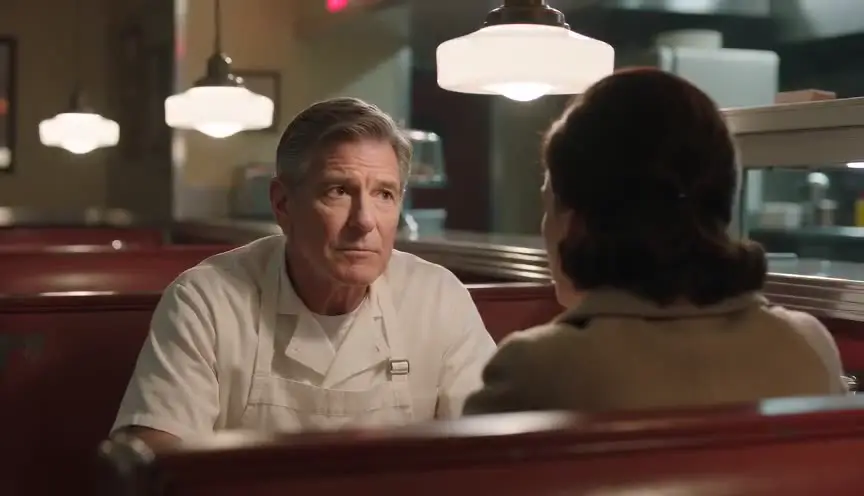
Cinematic workflow frames

这两张视觉素材作为配对使用:第一张展示 Cinematic workflow still, first angle, 35mm film grain(电影工作流静帧,第一视角,35mm 胶片颗粒),第二张切换到 Cinematic workflow still, second angle, 35mm film grain(电影工作流静帧,第二视角,35mm 胶片颗粒)——简要对比两个角度的构图与质感差异,然后继续推进。

The Core Chain: Script Spine → Deck Claims → Visual Proof
你的工作链必须保持单向流动,当真相(truth)发生变化时:剧本(script)的修改驱动推介资料(deck)的更新,而不是反向操作,确保剧本始终是唯一的真相源(source of truth)。
| Artifact | Must Reflect | Drift Risk |
|---|---|---|
| Logline | Core conflict | Trendy vagueness |
| Tone | Genre + aesthetic | Moodboard lying |
| Comparables | Market clarity | Delusional comps |
| Season engine | Duration promise | Pilot-only illusion |
| Key scenes | Script reality | Fantasy sequences |
Scenario One: Feature Pitch With Lookbook Pressure
Writer generates deck text from engine notes linked to scenes. Visual references are labeled “tone reference” vs “sequence reference” to prevent implied production commitments.
Scenario Two: Series Pitch With Character Grid
推介资料中包含角色分季愿望表(character wants-by-season table),该表从人物设定档案(bible)字段中自动生成。当试播集(pilot)改写导致角色愿望发生变化时,表格会在同一工作会话(work session)内同步更新,保持一致性。
Scenario Three: Investor Meeting With Numbers Adjacent
Deck may include budget-adjacent hints that signal financial awareness without premature commitment. Writer keeps feasibility notes near scene references for sanity checks, ensuring the creative vision aligns with production realities without leaking unvetted numbers publicly before formal budgeting begins.
As discussed in our guide on pitch deck slides that survive executive scrutiny, deliberate structure beats superficial decoration when communicating your project's core logic to decision-makers who evaluate dozens of pitches.
Step-by-Step Workflow You Can Replicate This Week
Step 1 - Freeze a script milestone: not “perfect,” but internally coherent enough to pitch without embarrassed wincing.
Step 2 - Extract spine sentences that carry the narrative's structural weight: thesis statement that frames your world, engine that drives the story forward, main escalation arc that raises stakes, and finale transformation that resolves character or thematic tension.
Step 3 - Build slide skeleton from spine logic, not from random template grabs that ignore your story's unique architecture, ensuring each slide earns its place by advancing understanding of your project's core proposition.
Step 4 - Map three to six script anchors: identify pivotal scenes that concretely demonstrate your project's tone, atmosphere, and production scale. Extract dialogue snippets and action beats with precision, preserving the rhythm and intent of the original lines while ensuring each excerpt remains immediately readable and contextually clear to pitch recipients.
Step 5 - Visual lane: curate a focused collection of reference imagery, attaching clear source labels to each asset; maintain a deliberate separation between aspirational high-bar references that communicate artistic ambition and achievable production-ready examples that reflect realistic budget and timeline constraints.
Step 6 - Version naming: enforce strict filename discipline where the script revision date corresponds exactly to the deck assembly date, embedding version control directly into your document naming convention for seamless tracking across iterations.
Step 7 - Rehearsal pass: perform a complete read-through of the deck aloud with your script PDF open in parallel view beside you. This dual-document review reliably surfaces logical contradictions, tonal mismatches, and factual inconsistencies that silent reading often misses.
As discussed in our article on concept art generated from scene descriptions for decks, visuals rooted in actual scripted scenes consistently outperform generic stock fantasy imagery, delivering stronger stakeholder conviction and more accurate production expectations.

Try it free
Try 熙熙 for free on your script
It is free. Import your existing project, get a clearer view of your outline, and regain control of your story structure in minutes.
Start FreeTrench Warfare: Script-to-Deck Failures
Deck writes checks the script cannot cash.
Comps chosen for ego, not positioning.
Too much plot summary, too little reason-to-care.
Lookbook images imply locations you cannot access.
Series deck sells eight episodes of substance with three ideas stretched thin. 系列企劃書要推銷飽滿的八集故事,而非把三個點子硬撐成八小時。 系列企劃書要推銷飽滿的八集故事,而非把三個點子硬撐成八小時。
If your deck is better than your script, your career learns the wrong lesson. 企劃書比劇本精彩,你的職涯就學錯了教訓——長期而言,內容才是立足之本。 企劃書比劇本精彩,你的職涯就學錯了教訓——長期而言,內容才是立足之本。
For external craft grounding, see <a href="https://www.oscars.org/nicholl/about/screenwriting-resources" rel="nofollow">Nicholl Fellowship screenwriting resources</a>.
[YOUTUBE VIDEO: Live rebuild of a pitch deck after a script rewrite - showing what must change slide by slide]
Tooling Reality: Manuscript App + Deck App
Many teams keep screenplay in screenplay tools and decks in deck tools. The workflow glue is discipline: a shared metadata doc listing scene anchors, logline versions, and comparable titles with rationale. Glue sounds humble. Glue holds buildings. 許多團隊把劇本留在劇本工具、把簡報留在簡報工具,工作流的黏著劑是紀律:一份共享的後設資料文件,列出場景錨點、logline 各版本、可比作品與選用理由。黏著劑聽來不起眼,卻是撐起大樓的關鍵。 許多團隊把劇本留在劇本工具、把簡報留在簡報工具,工作流的黏著劑是紀律:一份共享的後設資料文件,列出場景錨點、logline 各版本、可比作品與選用理由。黏著劑聽來不起眼,卻是撐起大樓的關鍵。
When Integrated Platforms Help
If your platform exports story artifacts into presentation-ready structures without inventing new plot, integration saves time. If integration generates plot, distrust it. 若平台只把故事素材匯出成簡報結構、不自行編造情節,整合就能省時;若整合會生成情節,請對它保持戒心。 若平台只把故事素材匯出成簡報結構、不自行編造情節,整合就能省時;若整合會生成情節,請對它保持戒心。
Closing Perspective
Pick a workflow that treats the deck as a dependent child of the script: loved, attended, corrected when the parent changes.
Then pitch one coherent movie - not two competing fantasies split across file types.
Final Step
Build your next script with 熙熙
Move from ideas to production-ready pages faster with timeline-native writing and AI-assisted story flow.
Try 熙熙