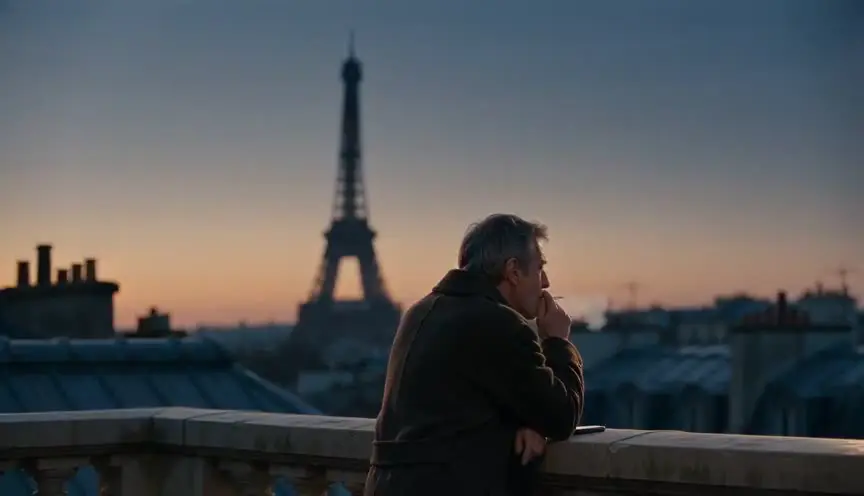
No images. No actors' faces. No visual effects. Just sound, voices, music, ambient atmosphere, and the theater of the listener's imagination.
Audio fiction is the oldest electronic storytelling medium, predating television by decades. And in the podcast era, it's back. Shows like Welcome to Night Vale, The Magnus Archives, and Homecoming have proven that audiences will commit to serialized audio drama with the same fervor they bring to prestige television.
But writing for audio isn't like writing for screen. The format has its own grammar, its own pacing, its own technical requirements. A ten-episode audio drama isn't a TV series without pictures, it's a distinct form with distinct challenges.
This guide covers how to structure a ten-episode narrative podcast from concept to episode outlines, and how to format scripts so that producers, sound designers, and voice actors can execute your vision.
Free tool: use the Script Time Calculator to estimate your runtime from page count.
Cinematic workflow frames

These two visuals work as a pair: the first shows Cinematic workflow still, first angle, 35mm film grain, and the second shifts to Cinematic workflow still, second angle, 35mm film grain - compare them briefly, then move on.

Why Audio Is Different: The Constraints and Freedoms
Audio drama operates under constraints that force creative solutions:
No visual information. Everything must be communicated through dialogue, narration, or sound. You can't show a character's expression; you must write dialogue that conveys the emotion. You can't establish location visually; you need ambient sound or a narrator.
Listener attention is divided. Many podcast listeners multitask, commuting, exercising, cooking. Your story must hold attention without visual anchors. This means clarity, momentum, and regular reorientation.
No pause button for confusion. Listeners can rewind, but in practice they often don't. If a scene is confusing, they're lost. Audio demands clearer storytelling than visual media, where viewers can scan the screen for context clues.
But audio also offers freedoms:
Unlimited locations. A sound effect can place you anywhere, a spaceship, a medieval castle, the bottom of the ocean. Production cost doesn't scale with location ambition.
Intimacy. Audio goes directly into the listener's ears. A whispered line feels close. An internal monologue feels like thought. This intimacy supports emotional storytelling.
Imagination. The monster the listener imagines is scarier than the one you could show them. The romance they picture is more personal. You're collaborating with their mind.
The Ten-Episode Structure: An Overview
A ten-episode season is a common format for narrative podcasts. It's long enough for substantial storytelling, short enough to feel contained. Here's a structural template:
Episode 1: The Hook and Setup
Establish the world, the protagonist, and the central question——交代世界观、引入主角、抛出核心悬念。在结尾处安排一个 inciting incident,用这个触发事件把听众推进整季的叙事引擎。
Episodes 2–4: Building the World and Complications
Deepen the world by introducing secondary characters who bring their own agendas and perspectives. Create complications that raise stakes organically—perhaps a secondary character's secret threatens the protagonist, or a new location reveals hidden dangers. Each episode should have its own self-contained arc with a beginning, middle, and resolution, while simultaneously advancing the larger story through character development, world-building revelations, or incremental progress toward the overarching goal.
Episode 5: The Midpoint
A major revelation or reversal that recontextualizes everything the audience has seen so far. The story shifts direction dramatically—what the protagonist thought was true turns out to be wrong, or an ally is revealed as an antagonist, or the real stakes escalate far beyond what was initially understood. This pivot point should feel both surprising and inevitable in hindsight.
Episodes 6–8: Escalation and Pursuit
The protagonist pursues their goal with increasing urgency as time runs short or circumstances intensify. Obstacles compound exponentially—each solution creates a new problem, and failures accumulate. Allies may be lost, betrayed, or forced to make impossible choices. The tension ratchets upward with each scene, creating a relentless forward momentum.
Episode 9: The Crisis
All seems lost in this penultimate crisis. The protagonist faces their greatest challenge yet, often an internal reckoning as much as an external obstacle. This is the classic "dark night of the soul" before the finale—a moment of despair, doubt, or apparent defeat that tests whether the protagonist has truly grown enough to succeed.
Episode 10: The Resolution
Climax and resolution. The central question is answered (or deliberately left open, if that's the design). The season arc completes; the series arc may continue.
This is a template, not a mandate—a flexible framework rather than rigid rules. Some shows front-load revelation using thriller structure, delivering twists early to hook viewers. Some delay the inciting incident for episodes, favoring slow-burn horror atmosphere over immediate action. But knowing the default five-act structure helps you choose departures intentionally, understanding which conventions you're subverting and why.
Episode Length: Finding the Right Duration
Podcast episodes vary wildly, from ten minutes to two hours. For serialized fiction, common lengths are:
20–30 minutes: Tight, focused episodes. Good for daily or frequent releases. Requires economical storytelling.
30–45 minutes: The "TV episode" equivalent. Room for development without overstaying. Most common for narrative podcasts.
45–60 minutes: Longer form, more immersive. Requires strong pacing to maintain attention. Works for complex narratives.
60+ minutes: Feature-length. Rare for episodic content, but works for anthology or event episodes.
Choose length based on story needs and audience expectations. A thriller might favor shorter, punchier episodes. A character study might need room to breathe.
A Table: Episode Structure Template
| Episode | Function | Story Beat | Listener Experience |
|---|---|---|---|
| 1 | Hook | Inciting incident | "I need to know more" |
| 2 | Expansion | World deepens, stakes clarify | "I understand the world" |
| 3 | Complication | First major obstacle | "This is harder than expected" |
| 4 | Deepening | Character reveals, subplot seeds | "I care about these people" |
| 5 | Midpoint | Revelation or reversal | "Everything I thought is wrong" |
| 6 | Pursuit | Protagonist acts with urgency | "The clock is ticking" |
| 7 | Escalation | Obstacles compound | "How will they survive this?" |
| 8 | Pre-crisis | Allies tested, losses possible | "It's all falling apart" |
| 9 | Crisis | Lowest point | "Is there any hope?" |
| 10 | Resolution | Climax and wrap-up | "That was worth the journey" |
Formatting the Audio Script
Audio drama scripts look different from film scripts. The key differences:
No visual scene headings. Instead of "INT. KITCHEN – DAY," you might use "SCENE 3: KITCHEN – AFTERNOON" or simply establish location through sound cues and dialogue.
Explicit sound design cues. Sound effects (SFX), music cues (MUSIC), and ambient atmosphere (ATMOS) are written into the script. These are as important as dialogue.
Character identifiers. Especially in scenes with multiple voices, clear character names before each line. Voice actors read from the script directly.
Narrator/host notation. If your show has narration, designate the narrator clearly. NARRATOR: or HOST: depending on the show's framing.
Parentheticals for delivery. Since actors can't see context, parentheticals guide performance: "(whispered)," "(angry but controlled)," "(distracted, reading something)."
A sample audio drama script might look like:
EPISODE 3: "THE CALL"
SCENE 1
ATMOS: Coffee shop. Afternoon. Ambient chatter, espresso machine, soft background music. ——这是环境声标注的示例:咖啡馆、下午时段、周围人声低语、浓缩咖啡机运转声、柔和的背景音乐,给声音设计师提供完整的声场构建依据。 ——这是环境声标注的示例:咖啡馆、下午时段、周围人声低语、浓缩咖啡机运转声、柔和的背景音乐,给声音设计师提供完整的声场构建依据。
MAYA sits at a corner table. Her phone buzzes.
SFX: Phone vibrating on table.
MAYA (hesitant, answering) Hello?
VOICE (ON PHONE, FILTERED) (distorted, cold) You have something that belongs to us. ——这是带技术处理和情绪指示的对白示例:电话里传来的声音、经过滤波处理、音色扭曲冰冷,台词是 ——这是带技术处理和情绪指示的对白示例:电话里传来的声音、经过滤波处理、音色扭曲冰冷,台词是
MAYA (scared, trying to stay calm) Who is this?
VOICE You have seventy-two hours.
SFX: Call ends abruptly.
MAYA (to herself, shaky breath) Oh god.
MUSIC: Tense underscore begins, low and pulsing.
Notice how sound does the work that visuals would do in a film script—the coffee shop is established through carefully layered ATMOS, the phone is heard rather than seen, and Maya's emotional state is guided by production parentheticals that shape performance without intruding on the listener's experience.

Try it free
Try 熙熙 for free on your script
It is free. Import your existing project, get a clearer view of your outline, and regain control of your story structure in minutes.
Start FreeWriting for the Ear: Dialogue and Narration
Audio dialogue has specific requirements:
Clarity over naturalism remains the guiding principle. In film, actors can mumble and viewers read body language to fill gaps. In audio drama, every word must be audible and understandable from the first listen. Write dialogue that's slightly cleaner than natural speech—not stilted, but purposefully articulate.
Identification through voice becomes your primary character tool. Listeners distinguish characters by voice alone, so cast diversity helps enormously (different genders, ages, accents). But dialogue itself should also distinguish each speaker: vocabulary choices, sentence rhythm, recurring catchphrases, and speech patterns all work to cement identity in the listener's mind.
Address characters by name more liberally than you would in screen dialogue. Audio dialogue benefits from characters occasionally using each other's names in conversation—it reorients the listener, clarifies who's speaking to whom, and prevents confusion in scenes with three or more voices.
Describe action through reaction rather than exposition. You can't show a character punching a wall on screen. But another character can say, "Jesus, calm down!" or "Your hand's bleeding," and the action is implied through that response, maintaining dramatic momentum without relying on a narrator.
Narration is optional but common in audio drama. It can:
- Establish location and time ("The warehouse had been abandoned for years.")
- Describe action that can't be conveyed through sound
- Provide internal monologue ("I didn't trust him. But I had no choice.")
- Create atmosphere and mood
Use narration purposefully and strategically. Excessive narration risks turning the show into an audiobook, drowning the drama in constant explanation; insufficient narration might leave listeners disoriented, unable to track shifts in time, location, or perspective.
Three Scenarios: Different Audio Drama Approaches
Scenario A: Found Footage / Documentary Style
The show presents itself as a real podcast investigating a mystery. Episodes include "interviews," "archival recordings," and "host narration." Think The Black Tapes or Serial.
Script considerations: Multiple audio textures are essential—clean studio voiceovers, compressed phone recordings, degraded old tapes, each signaling a different layer of the investigation. Heavy narration from the host guides the listener through evidence and theories. Characters appear as
Structure: Often investigative and serialized. Each episode uncovers new evidence, testimony, or contradictions, building momentum and ending on a cliffhanger or revelation that propels the listener into the next installment.
Scenario B: Full-Cast Drama
A traditional drama with multiple voice actors, layered sound design, and original score. Think Homecoming or The Bright Sessions—immersive fictional worlds built through performance and production craft.
Script considerations: Minimal narration. Strong vocal differentiation. Scenes play like radio theater, dialogue and sound do all the work.
Structure: Similar to TV drama. Scene-based, with act breaks suggested by music transitions.
Scenario C: First-Person Horror
A single narrator tells their story, often directly to the listener. Intimate, unsettling, immersive. Think The Magnus Archives statements.
Script considerations: One voice dominates. Atmosphere and music carry emotional weight. The narrator's reliability may be questionable.
Structure: Episodic stories that accumulate into a larger mythology, or a single continuous tale.
The "Trench Warfare" Section: What Goes Wrong
Failure Mode #1: Visual Writing
The script describes what things look like instead of what they sound like. "She wore a red dress" is useless information unless someone comments on it.
How to Fix It: Audit your script for visual-only information. If it can't be heard, cut it or convey it through dialogue/narration.
Failure Mode #2: Indistinguishable Voices
Three characters talk, all with similar cadences and vocabularies. Listeners can't tell who's speaking.
How to Fix It: Give each character distinct vocal patterns. Vary sentence length, formality, and verbal tics. Cast actors with distinct voices.
Failure Mode #3: Wall-of-Dialogue Fatigue
Long scenes of unbroken dialogue exhaust the listener. No sound design breaks. No atmosphere. Just talking heads.
How to Fix It: Layer your dialogue scenes with deliberate sound design—punctuate beats with sound effects, weave in music cues that shift mood, and use atmospheric transitions (ATMOS) to mark time or location changes. The goal is to create variety in auditory texture and rhythm, not just vary what characters are saying.
Failure Mode #4: Confusing Geography
Listeners often lose spatial orientation: they don't know where characters are physically located, who else is present in the scene, or when someone new has entered. New characters can appear mid-conversation without any acoustic or verbal introduction, leaving the audience confused.
How to Fix It: Establish location and character presence with clarity from the top of each scene. Deploy ambient sound to ground the listener in a specific environment. Have existing characters acknowledge arrivals through dialogue—lines like "Oh, Maya, you're back" or "Didn't expect to see you here"—so entrances are never invisible. Narration can also serve as an effective tool to orient the audience when diegetic cues aren't enough.
Failure Mode #5: No Hooks Between Episodes
Episodes conclude without offering a compelling narrative hook or emotional reason for the listener to return. Without forward momentum or unresolved tension at the episode boundary, listeners often drift away and fail to queue up the next installment.
How to Fix It: Structure each episode to end on a question that demands an answer, a revelation that reframes prior events, or a cliffhanger that raises immediate stakes. The listener should close the episode feeling a sense of urgency—a need, not just a willingness—to hear what happens next.

Production Considerations
Understanding production helps you write better scripts:
Casting. You'll likely work with a small cast (budget constraints). Write characters that can be played by available actors. Consider doubling (one actor plays multiple roles).
Recording. Voice actors usually record separately, not together. This means you can't rely on live improvisation or reaction. Everything in the script must be playable in isolation.
Sound design. 复杂的音效设计会消耗大量后期制作时间和精力。如果你的每一场戏都需要独特的环境音、成套的拟音效果和多层次叠加,整个制作周期就会被拉长,后期团队的工作负担也会急剧增加。在创作时要在艺术野心与实际可行性之间找到平衡点——该用音效强化氛围的地方不要吝啬笔墨,但也不必让每一秒都填满繁复的声音元素。
Music. Original score or licensed music? Both have costs. Write music cues generically ("tense underscore") unless you have specific music in mind.
Episode runtime. 在动笔之前,一定要明确你的目标时长,并且严格按照这个时长来组织剧本内容。一般来说,三十分钟的音频剧集对应大约三十页剧本(具体页数会因你采用的剧本格式、对白密度、音效标注详细程度等因素有所浮动)。提前规划好节奏和篇幅,能避免后期大幅删减或仓促补充内容。
The Perspective: Trust the Medium
New audio writers often compensate for the lack of visuals by over-writing — too much description, too much narration, too much hand-holding — because they don't yet trust the medium to carry meaning on its own.
But audio has been working for a hundred years, across radio drama, audiobooks, and podcasts. The listener's imagination is a feature, not a limitation. A door creaking open can be as evocative as showing a door onscreen. A character's breath catches, and we know they're afraid without needing to see their face or read an internal monologue.
Trust the listener. Trust sound. Write lean, vivid, and suggestive — let the theater of the mind do its work, filling in what you deliberately leave open.
The best audio drama feels like someone whispering a story directly into your ear: intimate, immediate, and impossible to pause without losing the spell.
[YOUTUBE VIDEO: A podcast producer and writer discussing how they structure a ten-episode season, with examples from their show's development process and script excerpts read by actors.]
Further reading:
- For guidance on documentary-style audio, see our guide on scripting true crime: finding the narrative arc in real events.
- If you're formatting dialogue-heavy scenes, see writing dual dialogue: formatting overlapping arguments.
- The BBC Writers Room has extensive resources on audio drama at bbc.co.uk/writersroom{:rel="nofollow"}.
Final Step
Build your next script with 熙熙
Move from ideas to production-ready pages faster with timeline-native writing and AI-assisted story flow.
Try 熙熙