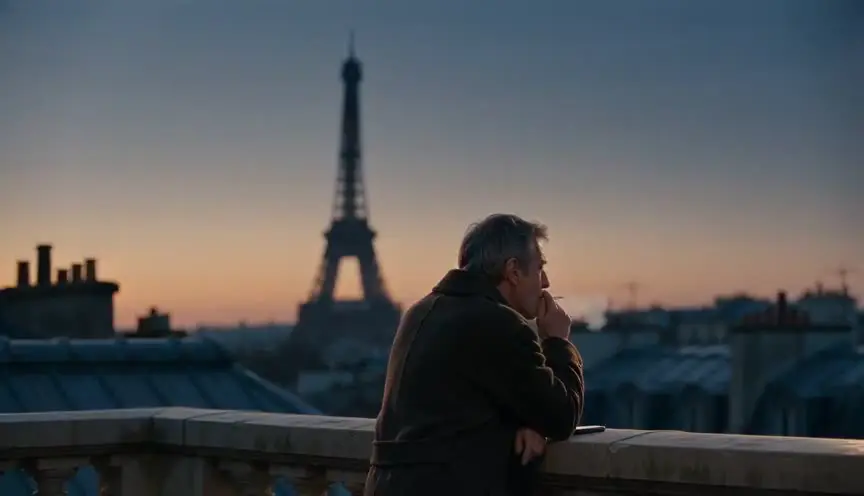
No one speaks.
Not once.
The protagonist continues to lie, negotiate, issue threats, extend forgiveness, and undergo transformation throughout the narrative.
That represents both the central challenge and the distinctive opportunity inherent in crafting a no-dialogue screenplay.
Writers frequently operate under the assumption that dialogue serves as the primary vessel for narrative intelligence and story complexity. Strip away spoken lines, and numerous scripts reveal their structural fragility—the underlying scene construction was never robust enough to communicate meaning through behavior, action, and visual storytelling alone.
Here's the deeper significance: composing a screenplay devoid of dialogue transcends mere gimmick or experimental format exercise. It functions as a rigorous craft stress test, one that reveals with unforgiving clarity whether your storytelling foundation is genuinely cinematic in nature.
When readers can grasp character objective, identify dramatic conflict, recognize story reversal, and track emotional shift without the aid of spoken lines, it confirms that your scene architecture possesses genuine structural integrity and visual coherence.
If they cannot, dialogue was probably hiding structural weaknesses.
Think about it this way: dialogue can explain intention. Silent action must prove intention.
This guide gives you a practical method to write no-dialogue scripts that stay tense, clear, and emotionally legible page after page.
Cinematic workflow frames

These two visuals work as a pair: the first shows Cinematic workflow still, first angle, 35mm film grain, and the second shifts to Cinematic workflow still, second angle, 35mm film grain - compare them briefly, then move on.

What “No Dialogue” Actually Means
A no-dialogue screenplay is not a no-sound screenplay.
You still have behavior, sound cues, environmental detail, rhythm, and reaction.
You may include nonverbal vocalizations, ambient media, radio chatter in world, or text cues depending on your ruleset. But your core dramatic progression cannot rely on spoken character dialogue.
That distinction matters because beginners often confuse silence with emptiness.
Silence is not absence of information.
Silence is information pressure delivered through nonverbal channels.
In no-dialogue writing, every movement becomes a sentence and every object can become a verb.
Core Structural Principles for Dialogue-Free Scenes
Principle 1: Objective Must Be Visible
If the audience cannot infer what a character wants in the scene, silence becomes fog.
In dialogue scenes, characters can state goals.
In silent scenes, character goals must manifest through visible behavior patterns—searching through drawers, hiding objects behind furniture, repairing broken mechanisms, blocking doorways, following another character's movements, stealing items when unobserved, refusing gestures through body language, or waiting in deliberate stillness.
Principle 2: Conflict Must Alter Behavior, Not Just Mood
Without lines, emotional shifts need external expression.
A character opening a door halfway instead of fully can carry more inherent conflict than an entire speech if the staging is executed correctly, because the partial action itself becomes a statement of hesitation, control, or concealment.
Principle 3: Reversal Needs a Physical Pivot
In dialogue-heavy scenes, story reversal can arrive through the introduction of new information embedded within the speech itself—a revealed fact, an unexpected confession, or a contradictory claim that shifts the scene's trajectory.
In no-dialogue scenes, reversal usually lands through concrete visual means: an object reveal that changes context, a spatial shift in character positioning, a timing disruption that breaks established rhythm, or an unexpected reaction from a character that contradicts prior behavior.
Principle 4: Scene Endings Need Action Residue
Do not end silent scenes on generic atmosphere.
End each scene on a choice made by a character, a visible consequence of prior action, or an unresolved action vector that propels the audience's attention directly into the next beat of the narrative sequence.
Comparison Table: Dialogue-Driven vs Silence-Driven Writing
| Element | Dialogue-Heavy Scene(对白密集场景)(对白密集场景) | No-Dialogue Scene(无对白场景)(无对白场景) | Common Beginner Trap(新手常见陷阱)(新手常见陷阱) |
|---|---|---|---|
| Objective clarity(目标清晰度)(目标清晰度) | Declared verbally(通过台词直接说出)(通过台词直接说出) | Shown through repeated behavior(通过反复出现的行为动作呈现)(通过反复出现的行为动作呈现) | Objective too abstract to visualize(目标过于抽象,无法视觉化表现)(目标过于抽象,无法视觉化表现) |
| Conflict expression(冲突表达方式)(冲突表达方式) | Argument/explanation(争论或解释性对话)(争论或解释性对话) | Blocking, timing, space, objects(走位调度、节奏时机、空间关系、道具物件的运用)(走位调度、节奏时机、空间关系、道具物件的运用) | Mood without actionable friction(只有情绪氛围,缺乏可操作的具体摩擦点)(只有情绪氛围,缺乏可操作的具体摩擦点) |
| Reversal delivery(转折点呈现)(转折点呈现) | Spoken reveal(通过台词揭示反转)(通过台词揭示反转) | Visual/physical reveal(通过视觉画面或肢体动作揭示反转)(通过视觉画面或肢体动作揭示反转) | “Nothing happens” pacing drag |
| Subtext vehicle(潜台词载体)(潜台词载体) | Line contradiction(台词本身的矛盾或言不由衷)(台词本身的矛盾或言不由衷) | Behavior contradiction(行为与意图的矛盾)(行为与意图的矛盾) | Overwriting action lines to compensate(用过度描写的动作指示来弥补缺失的戏剧张力)(用过度描写的动作指示来弥补缺失的戏剧张力) |
Three Beginner Scenarios That Usually Fail
Scenario 1: The Breakup Scene With No Words but No Action
Two characters sit silently at a table for two pages, looking sad—no gesture, no object, no shift in posture.
Atmosphere exists.
Drama does not.
Fix: convert that emotional state into tactical, visible actions: one character packs a bag with mounting urgency, the other hides a passport in a drawer, and both race to control the final object exchange before someone leaves.
Scenario 2: The Heist Sequence That Overwrites Action Prose
Writer compensates for the silence by writing dense literary paragraphs that explain internal emotion, backstory, and psychological subtext in prose.
Result: unreadable page blocks that slow the read, paired with weak cinematic specificity that offers no clear direction for performance or camera.
Fix: short action lines, concrete physical behaviors, and clear cause-and-effect chains that let actors and directors see exactly what happens beat by beat.
Scenario 3: The Art Film Draft With Symbol Overload
Every scene uses abstract visual metaphor without objective progression—缺乏具体可见的目标推进,观众难以追踪角色是否正在接近或远离某个状态。
Result: stylish ambiguity, low narrative pull.
Fix: assign each scene a practical task and measurable failure risk—为每场戏指定一项实操任务与可量化的失败风险,让观众明确看到角色在做什么、可能失去什么。
Step-by-Step Workflow for Writing a No-Dialogue Screenplay
Step 1: Define Story Spine in Verbs
Before drafting pages, map major beats using verbs only:
pursue, hide, protect, sabotage, trade, escape, confess (nonverbally), surrender—追逐、藏匿、守护、破坏、交易、逃脱、非言语坦白、投降,这些都是可在银幕上直接呈现的动作动词。
If your spine depends on abstract nouns alone, you will struggle in scene execution—如果你的故事骨架只依赖抽象名词(宽恕、救赎、觉醒),场景执行时就会陷入空洞对白与意象堆砌,演员无从抓取可演的行动。
Step 2: Build Character Lexicons of Behavior
Each lead character needs a distinct nonverbal grammar.
One avoids eye contact and over-organizes objects.
Another invades space and breaks routines.
Another communicates through ritual repetition.
These lexicons replace dialogue voice.
Step 3: Design Scene Objectives as Observable Tasks
Rewrite scene intents into visible outcomes:
“Win forgiveness” becomes “return stolen item and stay in room long enough to be accepted.”
"Hide guilt" 重写为 "remove evidence before partner enters"——将内心情绪转化为可观测的具体行为:销毁痕迹、整理现场、在伴侣进门前完成清理动作。
Step 4: Engineer Reversals Through Physical Information
Every 1-2 pages, introduce physical pivot: misplaced key, empty drawer, broken lock, late bus, missing ring, changed calendar mark——每隔一到两页引入一个实体转折点,例如钥匙放错位置、抽屉空了、锁坏了、公交车误点、戒指不见、日历标记被改动,用物理事件推动叙事节奏而非纯粹依赖对话或内心独白。
No pivots, no momentum.
Step 5: Control Action-Line Density
Silence scripts can become prose-heavy quickly.
Keep lines short.
One action per line in high tension beats.
Whitespace is pacing control.
Step 6: Use Sound as Structural Counterpoint
No dialogue does not mean no sonic rhythm.
Use alarms, trains, footsteps, buzzing lights, construction noise, TV murmur, breathing patterns as beat markers——用闹钟声、火车经过、脚步声、嗡嗡作响的灯管、施工噪音、电视低语、呼吸节奏等环境声响作为节拍标记,为场景建立听觉时间轴与氛围层次。
Sound can turn, accelerate, or puncture scenes.
Step 7: Run a Blind Readability Pass
Give pages to a reader and ask:
What does each character want in this scene?
What changed by end of scene?
If answers are vague, clarify objective behavior before polishing style——如果回答模糊不清,先明确客观行为(角色做了什么、看到了什么、触碰了什么)再打磨文体风格,确保叙事具有可验证的物理基础。
Body Image: Silent Scene Beat Map

The Trench Warfare Section: What Beginners Get Wrong and Exact Fixes
This is where no-dialogue drafts usually break.
Failure 1: Confusing Silence With Slowness
Writer stretches beats without new action information.
Fix: keep micro-objectives active every few lines.
Failure 2: Internal Emotion Explained in Action Lines
Prose tells us feelings rather than showing behavior.
Fix: convert internal states into external choices and physical tells——修正方法:将内心状态(焦虑、愧疚、犹豫)转化为外部选择(选择绕路、避开某个房间、故意拖延)和身体信号(手指敲桌、视线躲闪、肩膀紧绷),让情绪通过行为可见。
Failure 3: Repetitive Gesture Language
Characters repeatedly sigh, stare, or sit without progression.
Fix: escalate behavior pattern, not just emotional intensity.
Failure 4: No Distinct Character Movement Voice
Everyone performs silence the same way.
Fix: assign each character unique behavioral lexicon.
Failure 5: Symbolism Without Causality
Visual motifs appear but do not affect choices.
Fix: tie motifs to objective outcomes.
Failure 6: Scene Openings With No Immediate Tension Vector
Silent scenes start atmospheric and stay inert.
Fix: open with task already in motion.
Failure 7: Weak Spatial Blocking on Page
Reader cannot track who is where relative to stakes object.
Fix: anchor space early and refresh at pivot points.
Failure 8: Overdependence on Music Cues
Script implies score will do emotional heavy lifting.
Fix: build emotion in action logic first.
Failure 9: No Midpoint Reversal in Long Sequences
Extended silent passage with single emotional note.
Fix: insert clear physical disruption mid-sequence.
Failure 10: Endings That Don’t Force Next Action
Scene fades out on mood.
Fix: end with decision residue that drives next scene.
Silence is not minimalism by default. It is high-precision narrative behavior.
Try it free
Try 熙熙 for free on your script
It is free. Import your existing project, get a clearer view of your outline, and regain control of your story structure in minutes.
Start FreeAdvanced Craft: Writing Nonverbal Subtext That Reads Instantly
Subtext in silent scripts comes from contradiction between what a character does and what context suggests they should do.
A father returns stolen toy but removes batteries first.
A thief cleans fingerprints from knife but leaves wedding photo untouched.
A rival character opens an emergency exit door to allow the opponent to escape, only to immediately lock themselves inside the same space—a self-trapping irony.
Those inherent contradictions manage to carry line-level narrative complexity and tension even in the complete absence of spoken dialogue lines.
To write this consistently, use triads:
intended action,
performed action,
unintended reveal.
This triad framework helps you avoid flat literal behavior.
It also gives actors and directors a wealth of playable ambiguity and interpretive freedom without causing reader confusion or narrative opacity.
Operational Workflow: Sequence Ledger for Silent Scripts
Silent scripts remain vulnerable to pacing drift because the absence of dialogue removes the obvious beat boundaries that spoken lines naturally provide.
Use a sequence ledger during rewrite:
beat number
objective verb
obstacle event
reversal event
outcome state
If two consecutive story beats do not change the outcome state or shift character position, you likely have dead air that adds no forward momentum.
Cut, combine, or escalate.
For production-facing clarity, ensure every complex physical beat remains shootable and comprehensible in one or two camera setups. Overly intricate action that requires impossible coverage is a common silent-script trap.
For script readability benchmarks across visual storytelling styles, the <a href="https://thescriptlab.com/screenplays/download-screenplays/" rel="nofollow">Script Lab screenplay resources</a> can help compare pacing and action-line density patterns, but your own objective-reversal discipline should drive final decisions.
As discussed in our guide on [how to show simultaneous action in two locations in a script], shared causality is what keeps high-information sequences alive without explanatory dialogue.
If your silent story includes major mediated beats, pair with [screenplay formatting for surveillance camera footage] to preserve source clarity when visual perspective narrows.
And when nonverbal communication happens over remote channels, [screenplay formatting for FaceTime and video chat scenes] helps maintain spatial logic without spoken exposition.
Body Image: Nonverbal Subtext Triad

YouTube Placeholder
[YOUTUBE VIDEO: A practical rewrite of a dialogue-heavy scene into a no-dialogue version, showing objective mapping, action-line compression, and nonverbal reversal design.]
Before-and-After Micro Example
Before:
“INT. KITCHEN - NIGHT
Mara and Eli argue about trust.
MARA You never tell me the truth.
ELI I was trying to protect you.
MARA From what?
ELI From me.
She cries.”
Functional, but speech-dependent.
After:
“INT. KITCHEN - NIGHT
Mara opens Eli’s backpack.
Inside: passport, cash, one-way train ticket.
Eli enters. Freezes.
Mara places the ticket on the table between them.
Eli reaches for it.
Mara pins it under a kitchen knife.
Eli slowly pulls his house key off his ring and sets it beside the ticket.
Mara does not pick it up.
She turns off the kitchen light and leaves him in the dark.”
Same emotional payload.
Stronger cinematic behavior chain and clearer reversal.
Ending Perspective: If It Works in Silence, It Works for Real
Writing a screenplay with no dialogue strips away your safest crutch and forces you to rely purely on visual storytelling mechanics.
That is uncomfortable.
It is also clarifying.
When scenes still land without spoken explanation, you know your objectives are visible on screen, your reversals are earned through action and reaction, and your emotional turns are embodied in gesture, expression, and spatial relationships between characters.
That discipline of conveying narrative meaning through purely visual means carries back into every dialogue-rich script you write afterward, sharpening your ability to show rather than tell.
Because then dialogue becomes enhancement, not scaffolding.
So if you want to test whether your storytelling is truly cinematic—whether it works as moving images first and words second—try silence seriously as a constraint.
Not as an aesthetic stunt.
As a craft laboratory.
Build behavior systems.
Write for consequence.
End scenes on action residue.
Do that, and no-dialogue screenwriting stops being “minimalist.”
It becomes one of the most demanding and rewarding forms of narrative precision available on the page—a discipline that asks writers to compress meaning into gesture, framing, and sequence without the safety net of spoken explanation.
There is another high-level consideration that separates ambitious silent scripts from enduring ones: information economy, the ruthless curation of what gets shown and when, and the confidence to let certain story elements remain latent rather than visually announced.
When dialogue disappears, many writers overcompensate with visual overstatement, believing that silence demands constant symbolic density. Every prop becomes symbolic. Every gesture becomes emphatic. Every scene tries to carry three meanings at once, and the result is narrative clutter rather than clarity.
The result is visual noise.
Strong no-dialogue writing is selective, disciplined in its means. It chooses a few recurring information channels and uses them consistently across the runtime, building a visual grammar the audience learns to read fluently rather than decode scene by scene.
object continuity,
spatial control,
timing pressure,
behavior contradiction.
If all four channels fire at full volume in every scene, audience fatigue arrives quickly, and the script feels like it's shouting. If one or two channels dominate each sequence while others support—offering texture without competing for primacy—pacing feels intentional and legible, and the viewer's attention remains engaged rather than overwhelmed.
Another advanced framework is “silent grammar by act.”
Act One: establish objective and behavior lexicon clearly, avoid heavy ambiguity. Act Two: increase contradiction between visible behavior and inferred intent. Act Three: resolve contradiction through irreversible action, not explanatory gesture.
This progression mirrors dialogue scripts where subtext deepens across acts, but here it is carried almost entirely by action architecture.
You can also design “action motifs with semantic drift.” A character repeatedly wipes a table in Act One to show discipline. In Act Two, same wipe becomes avoidance. In Act Three, they leave the table dirty for first time - an emotional declaration without words. This is one of the most powerful no-dialogue tools because repetition plus change equals meaning.
Practical Drill: Objective Visibility Test
Take any silent scene and remove your own interpretation.
Ask a reader to answer in one sentence: “What does this character want right now?”
If they cannot answer quickly, objective is not visible enough.
Fix with clearer task behavior, not more stylistic prose.
Practical Drill: Reversal Timestamp Pass
Mark every reversal beat in your no-dialogue sequence with approximate page minute.
If reversals are too far apart, scene may feel inert. If reversals are constant but low-impact, scene may feel jittery. Aim for meaningful shifts at rhythmically sensible intervals tied to objective pressure.
This is especially useful in long silent stretches where pace can drift without obvious warning.
Practical Drill: Silent Dialogue Substitution
Choose one dialogue scene from an older draft and rewrite it without any speech.
Then compare:
What information survived?
What emotional nuance was lost?
What became stronger?
This comparison teaches exactly which parts of your writing are truly cinematic and which rely on verbal explanation.
Practical Drill: Prop Burden Audit
在无对白场景中,每一个承载叙事意义的道具都应该被明确列出并审视其功能。道具不是装饰,而是推动情节或揭示人物内心的具体媒介,因此需要逐一盘点它们各自传递的信息层。
If too many props are required for comprehension, simplify.
Each prop should do one core job. Multi-purpose props are great when clear, disastrous when overloaded.
A frequent beginner issue is building puzzle-box scenes where meaning depends on ten tiny details. Readers should not need forensic memory to follow emotional logic.
One final revision habit makes a huge difference: run a no-dialogue scene aloud as choreography.
Literally speak only action verbs in sequence: opens, hides, hesitates, drops, retrieves, blocks, leaves.
If that verb chain feels repetitive or aimless, the scene likely needs structural redesign—perhaps a clearer want driving each beat, or a tighter cause-effect spine underneath the gestures.
If it feels escalating and specific, with each action raising stakes or revealing character, then prose polish can amplify it safely without risking structural collapse.
Silent scripts are brutal and beautiful for one reason: they remove verbal camouflage, forcing every story turn to land through visible behavior alone.
What remains is pure scene engineering.
And if your engineering is sound—objectives legible, obstacles clear, reversals earned—the emotional impact can be stronger than almost any speech-driven page because the audience is participating actively, not being instructed what to feel.
If you want a final pre-submission check, run a "subtitles off" imagination pass: can the entire film be followed by intent and consequence alone, scene by scene, without your internal explanation running in parallel to fill gaps? Where the answer is no, your next revision target is visible objective design, not poetic action description.
The hidden benefit of this process is transferable and often unexpected. Writers who master no-dialogue sequencing usually return to dialogue scripts with sharper scenes, cleaner blocking, fewer explanatory lines, and a stronger sense of visual rhythm. They trust action and image composition to carry thematic meaning, so speech can become specific, dangerous, and concise instead of functional filler or exposition. Even if you never write a fully silent feature or experiment with wordless shorts again, training this particular muscle improves every genre you touch—from thrillers to domestic dramas—because you've learned to think in behavior, gesture, and spatial storytelling before reaching for a line of dialogue.
That advantage compounds over years, shaping your instincts across projects, and is visible on every page you deliver.
Final Step
Build your next script with 熙熙
Move from ideas to production-ready pages faster with timeline-native writing and AI-assisted story flow.
Try 熙熙