运镜提示词

每一种运镜,都有动画演示,提示词可直接复制

看清每一种运镜到底对画面做了什么,然后复制那句能在 Veo、Sora、Runway、Kling 和 Seedance 里触发它的措辞。别再脑子里想着横摇、嘴上却让它推轨了。

文生视频模型能够理解真实的摄影词汇,但有一个前提,那就是你必须使用准确、恰当的词。下面每一张卡片都会在同一个场景基础上,把一种运镜方式做成动画,让这些差别真正被看见,而不是只靠文字描述:横摇是一种没有视差的扫视,横移是带有视差的滑动,推进是让镜头穿过空间,而变焦则会把空间压平。

动画是在你浏览器里绘制的纯 CSS 演示。复制提示词不会向任何服务器发送内容。

Static / Locked-off

The camera does not move at all, as if mounted on a tripod.

什么时候用: Composed tableaus, dialogue, comedy framing, and letting action play out inside a fixed frame.

static camera, locked-off shot, no camera movement

看一个完整的示例提示词

Wide shot of an empty diner at dawn, static camera, locked-off shot, no camera movement.
Pan

The camera rotates horizontally on its axis, sweeping the view across the scene.

什么时候用: For revealing a landscape, for following action across a space, and for connecting two subjects.

slow pan from left to right across the scene

看一个完整的示例提示词

Desert canyon at golden hour, slow pan from left to right across the scene, cinematic.

Tilt

The camera rotates vertically, pivoting the view up or down from a fixed position.

什么时候用: For revealing scale (a tower, a giant), for moving from detail to context, and for hero introductions.

slow tilt upward from the ground to the sky

看一个完整的示例提示词

Base of a futuristic skyscraper at night, slow tilt upward from the ground to the sky.

Push-in

The camera moves physically toward the subject, tightening the frame.

什么时候用: For building tension, for signaling a realization, and for isolating a character from their surroundings.

slow push-in toward the subject, smooth cinematic camera move

看一个完整的示例提示词

A detective studies a wall of photographs, slow push-in toward the subject, smooth cinematic camera move, moody interior light.

Pull-back

The camera moves physically away from the subject, widening the frame.

什么时候用: Endings of a scene or a whole film, reveals of context or isolation, and beats that show how small the subject is in the world around it.

a slow pull-back away from the subject, gradually revealing the surroundings it sits inside and gradually exposing spatial relationships

看一个完整的示例提示词

A lone figure on a rooftop, slow pull-back away from the subject, revealing the surroundings, sprawling city below.

Crash zoom

A sudden, fast zoom onto the subject, snapping the frame tighter in a fraction of a second—often achieved with a dolly-in combined with a zoom for maximum impact.

什么时候用: Shock beats, comedic emphasis, stylized action (Tarantino, Wright).

sudden crash zoom onto the subject

看一个完整的示例提示词

A cowboy's eyes narrow under his hat brim, sudden crash zoom onto the subject, western standoff.

Dolly / Truck

The camera slides laterally on a track, creating natural parallax between foreground and background.

什么时候用: Moving past environments, following lateral action, elegant scene exploration.

camera trucks right, sliding laterally with natural parallax

看一个完整的示例提示词

Rows of neon market stalls at night, camera trucks right, sliding laterally with natural parallax.

Tracking shot

The camera travels with the subject, keeping them framed while the world streams past.

什么时候用: Walk-and-talks 这类边走边谈的段落、chases 追逐戏,以及需要把观众带入角色 forward motion 向前行进状态中的场景,都适合用这种拍法。

tracking shot that follows the subject continuously as they move through space, keeping the subject centered in frame throughout the duration of the shot

看一个完整的示例提示词

A runner sprints through rain-soaked streets, a tracking shot that keeps following the subject as they move through the space, and the subject stays centered in the frame for the whole move.

Orbit / Arc

The camera circles around the subject in a smooth arc, keeping them centered.

什么时候用: Hero moments 这类英雄登场的高光瞬间、需要把 subject 的各个侧面都展示出来的场合,以及在场景中段做 dramatic emphasis 戏剧性强调的时候。

camera orbits slowly around the subject in a smooth arc

看一个完整的示例提示词

A samurai stands ready in a bamboo grove, camera orbits slowly around the subject in a smooth arc.

Crane / Boom

The camera rises (or descends) vertically through space, changing the angle on the whole scene.

什么时候用: Openings and closings 开场与收尾,以及需要从 intimate detail 私密细节一路抬升到 god's-eye context 上帝视角全局语境的时候。

crane shot that rises smoothly from ground level where action begins, ascending to a high angle positioned above the scene to provide an elevated vantage point

看一个完整的示例提示词

A wedding crowd throws confetti, a crane shot rising from ground level up to a high angle positioned above the scene, looking down on the action.

Handheld

The camera is carried, with subtle natural shake and drift in every frame.

什么时候用:适用于纪录片式的真实感(Documentary realism)、不安情绪(unease)、动作的即时性(action immediacy),以及伪纪录片风格(found-footage styles)。

handheld camera with subtle natural shake, documentary feel

看一个完整的示例提示词

Soldiers move through a smoke-filled corridor, handheld camera with subtle natural shake, documentary feel.

Whip pan

An extremely fast pan that blurs the image, abruptly snapping from one framing to another and making the motion feel sudden.

什么时候用:适合充满活力的转场(Energetic transitions)、喜剧式的双拍反应(comedic double-takes),以及把同时发生的动作连接起来(connecting simultaneous actions)。

fast whip pan to the right with motion blur

看一个完整的示例提示词

From the pitcher's wind-up, fast whip pan to the right with motion blur, to the batter waiting.

Rack focus

The lens focus shifts back and forth between two planes, with the foreground and the background trading sharpness as the focal point moves.

什么时候用:用于重新引导注意力(Redirecting attention)、在同一个画面内完成揭示(reveals within a frame),以及不借助剪切就把两个故事节拍连接起来(connecting two story beats without a cut)。

rack focus from the foreground subject to the background

看一个完整的示例提示词

A letter in trembling hands, rack focus from the foreground subject to the background, where a door slowly opens.

Dutch angle

The camera rolls on its long axis so the horizon sits tilted in the frame.

什么时候用:当你需要传递 Disorientation(失去方向感)、psychological tension(心理层面的紧张)、villain framings(反派视角的取景与构图)、worlds gone wrong(世界失序、规则崩坏)这类情绪与叙事氛围时,就适合采用这种镜头处理方式。

dutch angle, camera rolls to a tilted horizon

看一个完整的示例提示词

A hacker's face lit by monitor glow, dutch angle, camera rolls to a tilted horizon, thriller mood.

Zoom in

The lens focal length increases from a fixed position: the frame tightens but perspective flattens, with no parallax — the camera itself does not move, so the shot closes in on the subject while depth is compressed and nothing shifts between foreground and background. 镜头焦距在固定机位上拉长,画面逐渐收紧聚焦但透视关系被压平,不产生视差位移,物体间的空间层次被压缩成平面化构图。

什么时候用:当你想要 Surveillance and documentary feels(监控录像与纪录片式的观感)、retro 70s style(70 年代复古风格)、deliberate optical emphasis(刻意强调光学特性)这类效果时使用。

slow zoom in on the subject, optical zoom, no camera movement

看一个完整的示例提示词

A figure waits at the far end of a train platform, slow zoom in on the subject, optical zoom, no camera movement, 70s thriller style.

Zoom out

The lens focal length decreases from a fixed position, widening the frame without the camera traveling.

什么时候用:Deadpan comedic reveals(冷面、不带情绪的喜剧式揭示),也就是从某个细节起步、向后拉开(stepping back from a detail to its flat context),让人看到它所处的那片扁平语境时使用。

slow zoom out revealing the scene, optical zoom, no camera movement

看一个完整的示例提示词

A single melting ice cream cone on hot asphalt, slow zoom out revealing the scene, optical zoom, no camera movement, an empty amusement park around it.

Dolly zoom (Vertigo)

The camera dollies one way while the lens zooms the other: the subject stays the same size as the background warps toward or away.

什么时候用:Realization(恍然领悟)、dread(恐惧、不安)、vertigo(眩晕感),以及整个世界仿佛围绕角色发生偏移的时刻(可参考 Jaws、Vertigo 中的处理)。

dolly zoom vertigo effect,也称为希区柯克变焦或反向推拉:摄影机在推近主体的同时收窄焦距(或后拉时放大焦距),令背景产生透视扭曲和空间压缩感,而画面中的主体尺寸保持不变,营造出强烈的视觉不安与心理冲击

看一个完整的示例提示词

A detective freezes as the truth lands, dolly zoom vertigo effect: as the lens zooms and the camera moves, the background warping kicks in while the subject stays the same size in frame..

Steadicam glide

The camera floats forward smoothly with a subtle organic sway, stabilized but alive.

什么时候用:Following characters through spaces,跟着人物穿过空间,营造 immersive long-take feels 沉浸式长镜头感(Goodfellas, The Shining)。

smooth steadicam glide forward, floating camera movement

看一个完整的示例提示词

Moving through a crowded backstage corridor toward the stage lights, smooth steadicam glide forward, floating camera movement.

FPV drone dive

A first-person drone races and dives toward the subject at high speed, with aggressive momentum driving the whole move.

什么时候用:High-energy reveals、action sequences、flythrough transitions,以及 music video energy 这类高能段落。

FPV drone shot diving toward the subject at high speed

看一个完整的示例提示词

A lighthouse on a storm-battered cliff, FPV drone shot diving toward the subject at high speed, waves exploding below.

Aerial pull-away

A drone rises and pulls back, shrinking the subject as it recedes into an expanding aerial view.

什么时候用: Endings, closing beats, scale reveals, moments that leave a character to their fate, and shots that establish geography in reverse.

aerial drone shot rising and pulling away from the scene

看一个完整的示例提示词

A lone car drives a desert highway at dusk, aerial drone shot rising and pulling away from the scene.

Barrel roll

The camera rotates a full 360 degrees on its long axis, rolling the whole world around the lens.

什么时候用: Stylized transitions, zero-gravity or dream sequences, and high-impact music video moments.

camera barrel roll, full 360 degree rotation

看一个完整的示例提示词

Skydivers in freefall against sunset clouds, camera barrel roll, full 360 degree rotation.

Snorricam

The camera is rigged to the subject's body facing them: the actor stays locked in frame while the world swings behind them.

什么时候用: Panic, intoxication, obsession - subjective states in which the world unmoors (Requiem for a Dream).

snorricam shot, camera locked to the subject while the background swings around them

看一个完整的示例提示词

A man sprints through a neon market in panic, snorricam shot, camera locked to the subject while the background swings around them.

怎么用这个页面

找到和你脑中那个镜头相符的运镜,复制它的提示词片段,然后紧跟在取景和主体之后粘进你的 AI 视频提示词里。每个片段都用了主流文生视频模型读得最稳的措辞,并带上一个速度词,因为「缓慢推进」和「急推变焦」是两条不同的指令,不是同一条的两种写法。每张卡片上的完整示例,展示了这个片段放进一条排序良好的提示词后的样子。

AI 视频生成中的运镜

运镜是 AI 视频提示词里被用错得最多的部分。Veo、Sora、Runway 和 Kling 这类模型,训练素材都是用真实电影词汇描述过的,所以「缓慢左横摇」「跟拍镜头」「摇臂上升」是它们真的会照做的指令,而「史诗级动感镜头」只是噪音,它会自己乱猜着填。

那几个经典的混淆最费重生成次数。横摇是摄影机在原地转动,整个画面被一起扫过去,画面内部没有视差;而推轨或横移是摄影机真的在移动,前景和背景于是分离开来,前后的距离感也跟着变。变焦改变的是焦距,会把画面压平;推进则穿过空间往前走,透视保持自然。要是要错了那一个,出来的运动会「不对劲」,可你却又说不上哪里坏了。

一个镜头一种运镜,是专业默认做法,AI 生成和真实片场都一样。当某个瞬间看起来需要两种运镜时,就生成两段再剪到一起,或者挑出主导的那一种,剩下的交给剪辑。把多条摄影机指令堆进一条提示词,是 AI 素材发糊、发飘最常见的原因。

适合谁

  • 用 AI 做电影的人 直接要你脑中那个运镜,而不是把生成次数烧在猜词汇上。
  • 电影专业学生 用眼睛学运镜词汇,看它在银幕上真实的样子,而不只是词条解释。
  • 视频团队 共享同一份参考,让流水线里的每条提示词都说同一套摄影机语言。
下一步

从剧本出发,直接得到分镜。

熙熙 把你的剧本拆成镜头,并据此生成分镜。景别、角度、运镜和时长都由你掌控。角色在镜头之间保持一致。

  • 0 美元,永不过期
  • 导出 PDF 和 Final Draft
  • Mac、Windows、Linux、iPad
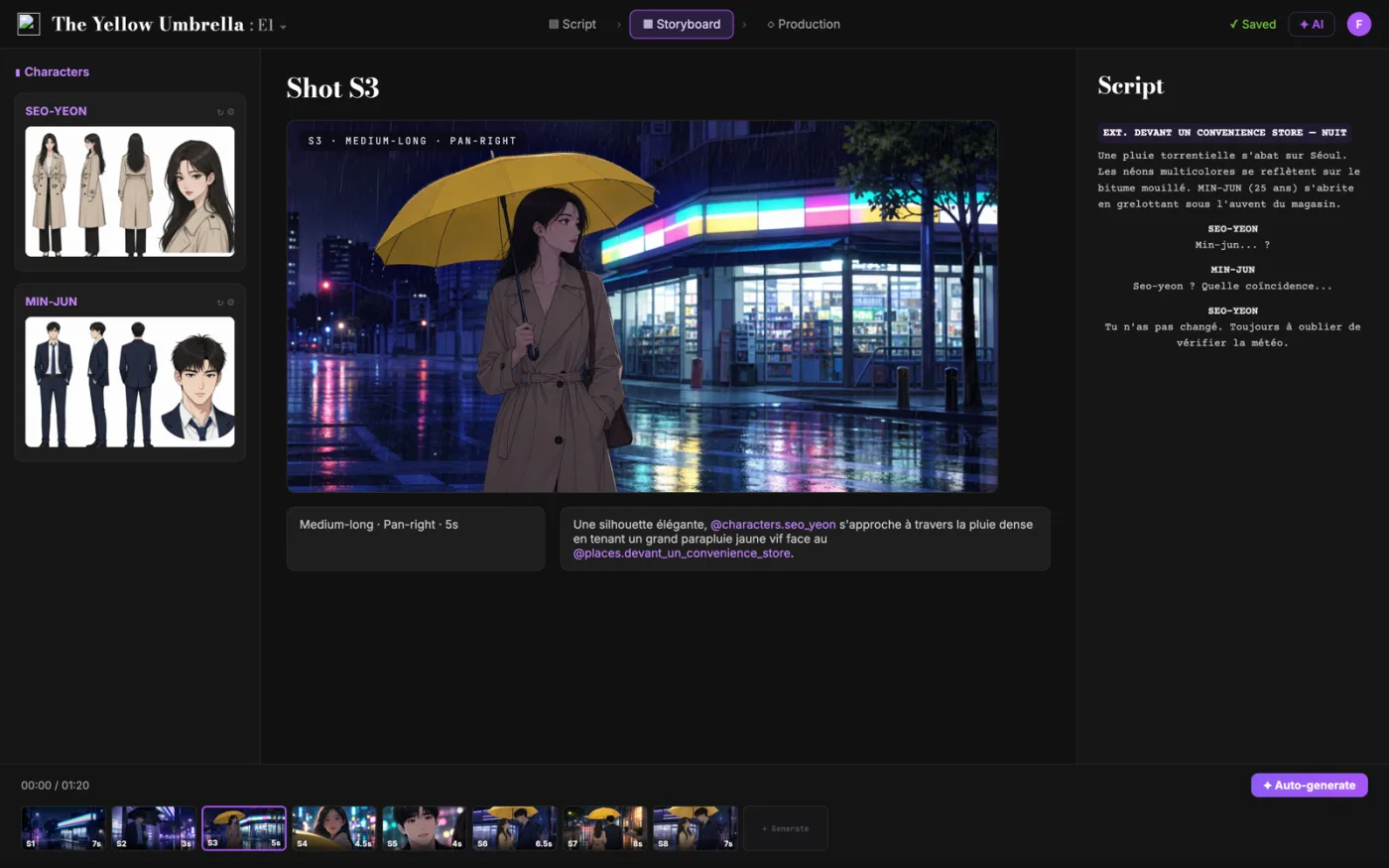
The Yellow Umbrella 镜头 S3 的 熙熙 分镜,旁边是角色设定图和剧本

运镜提示词:完整指南

它把每种核心运镜的动画演示,和可直接粘贴的提示词片段配在一起,这些片段在 Veo、Sora、Runway、Kling 和 Seedance 上能稳定生效。

这类工作的核心问题很清楚:运镜的名字是从文字定义里学来的,于是有人写「推轨」其实想要的是「摇镜」,画面就动错了。不解决,它就会在后面的环节制造摩擦,让决策变慢。实际要达到的是你看着每种运镜的动画,明白它对画面做了什么,然后复制那句能在 AI 视频模型里真正触发它的措辞。

需要记住的限制:各家模型对镜头语言的支持不一样:摇镜、推进和跟拍多数都处理得好,环绕和变焦点这类复杂运动可能需要再生成一次,或者换一个带专门运镜控制的模型。

进阶用法:AI 影片创作者会把一个镜头配一种运镜,并在整个段落里锁死主体描述,这样动的是镜头,世界还是同一个。

一步步怎么做

  1. 看动画,找到和你脑子里那个镜头对得上的运动。
  2. 复制提示词片段,粘到你的视频提示词里,放在主体和场景之后。
  3. 展开示例,看看这个片段放在一条完整、顺序合理的提示词里是什么样。
  4. 一个镜头只用一种运动:堆叠又互相矛盾的运镜指令,模型要么糊掉要么无视。

按角色分的使用场景

  • AI 影片创作者:不再猜术语,直接写出你真正想象的那种运动。
  • 学生:用看的方式学会每种运镜对画面做了什么,而不是靠读。
  • 视频团队:共用一页参考,让所有人的提示词说同一套镜头语言。

常见的坑

  • 在一条提示词里堆好几种运动(摇 + 环绕 + 变焦),拿到一坨含混的运动。
  • 该推进的时候写「变焦」:变焦把空间压平,推轨是真的穿过空间。
  • 写「镜头有动感」这类含糊说法,而不是一个有名字的具体运动。

行业里的做法

  • 给每个运动加一个速度词:「缓慢推进」和「快速甩镜」完全是两回事。
  • 把运动和动机绑在一起:「跟随主体的跟拍」胜过孤零零一个「跟拍」。
  • 如果模型无视了运镜,把它往提示词前面挪,紧跟在景别后面。

把这个工具的输出当成决策的辅助,而不是写作本身的替代。一个好剧本被记住,靠的是具体的选择、准确的情绪,以及戏剧动作的清晰。工具的作用是把噪音去掉,让你的精力落到真正要紧的地方:人物、冲突、升级和兑现。每过一轮就回看一次结果,把接受的改动记下来,你的工作方式会一稿比一稿更快、更可预期。这种稳定正是专业合作者看重的东西:意外更少,理由更清楚,剧本朝着有意识的方向长。

延伸问答

电影里主要的运镜有哪些?

核心词汇是摇镜、俯仰、推进、拉远、变焦、横移、跟拍、环绕或弧线、升降、手持、甩镜、变焦点,以及荷兰角的倾斜。这一页每一种都有动画,并配上对应的 AI 提示词。

哪些运镜在 AI 模型里效果最好?

摇镜、推进、拉远、跟拍和手持风格,Veo、Sora、Runway、Kling 和 Seedance 都能稳定理解。环绕、升降和变焦点也能做,但有时要重试,或者换一个带专门运镜控制的模型。

摇镜和推轨有什么区别?

摇镜说的是相机停在原地转动,镜头扫过整个画面,画面内部没有视差。推轨则是相机真的在空间里移动,因此前景和背景会以不同速度滑动。把这一页的两段动画放在一起看,两者的区别一看就清楚。

为什么我的 AI 视频不理会运镜提示?

最常见的原因是一条提示词里堆了好几种运动、运镜被埋在长提示词的末尾,或者用词太含糊。用一个有名字的运动,紧跟在构图之后,再加一个速度词。

变焦和推进有什么区别?

变焦是在固定机位上改变焦距,镜头一边收紧,一边把透视压平。推进是相机真的朝主体移动,透视会保持自然,不会像变焦那样被压扁。想要电影感时,提示词里就写「推进」;只有确实需要那种光学效果时,才写「变焦」。

能在一条提示词里组合多种运镜吗?

一般来说一个镜头一种运动效果最好。如果故事确实需要两种,要么挑主导的那一种,要么生成两条片子再剪在一起,就像真实剧组那样处理。

FAQ

常见问题

能。这些片段使用的都是所有主流文生视频模型在训练过程中见过的标准摄影词汇,所以可以直接拿来写提示词。具体支持程度会因运镜而异:横摇、推进和跟拍在所有模型上都最可靠;环绕和变焦换焦在某些模型上可能需要重生成一次。

横摇指的是摄影机自身原地转动,整个画面会一起扫过,同样不产生视差。推轨则是摄影机本身在空间里移动,近处和远处的元素会以不同速度发生位移。拿上面那两段动画直接对比,差别一眼就能看出来。

通常是因为运镜被埋在一条长提示词的末尾、措辞含糊,或者和另一种运镜堆在了一起。把一个有名有姓的运镜紧跟在取景之后写上,加一个速度词,并且保持一个镜头一种运镜。

多数情况下应该选推进。它让相机穿过空间,透视保持自然,读起来更有电影感。变焦会把透视压平,那是一种刻意的风格效果:用在急推变焦上很棒,但用在缓慢的戏剧性靠近上就是错的。

在同一个镜头里同时套用两种运镜,通常会让结果变差。更稳妥的做法是挑出主导的那一种运镜来执行,或者把两种运镜分别生成为两段独立的片段,再剪到一起,就像真实制作里用多条素材覆盖一场戏那样。