Thirty seconds. That's 750 frames at 25fps. Approximately 75 words of dialogue if you want the audience to actually absorb what's being said. Less if there's music. Less if there's action. Less if you want moments to breathe.
Most screenwriters think in ninety-minute increments. A commercial writer thinks in thirty-second increments, and every second costs six figures to produce and millions to air. There is no room for indulgence. Every image, every word, every beat must earn its place.
The format used for commercials isn't the screenplay format you know. It's called A/V, Audio/Video, and it looks different because it serves a different purpose. A screenplay describes what an audience experiences linearly. An A/V script separates picture and sound into parallel tracks, allowing creatives, clients, and production teams to evaluate each element independently.
If you've never written A/V, it feels strange at first. Where's the dramatic prose? Where's the white space? But once you understand the logic, you'll see that A/V is elegant, a format designed for the specific constraints of advertising, where time is money and ambiguity is unacceptable.
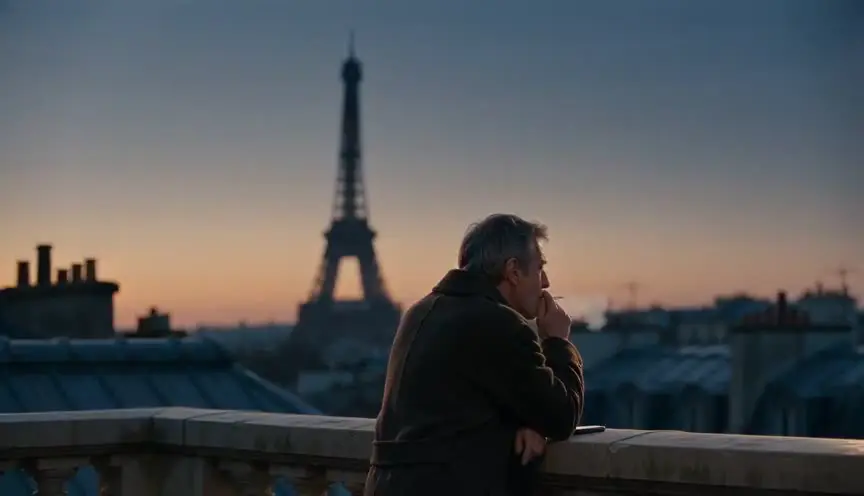
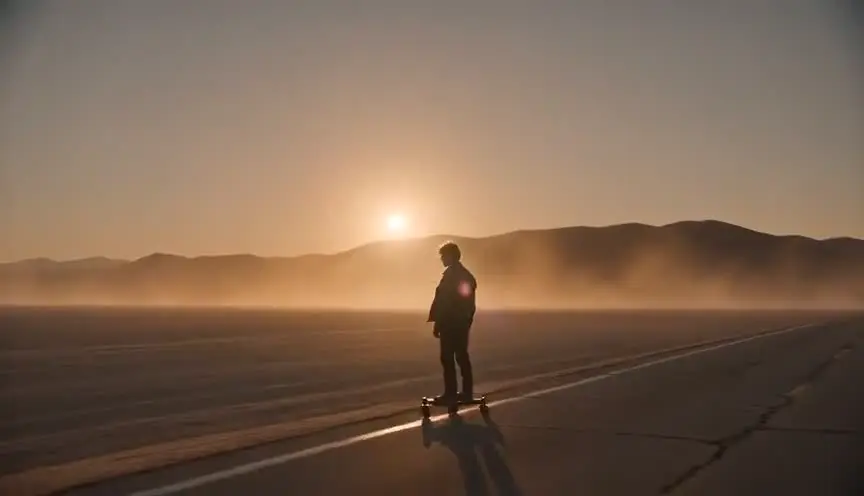
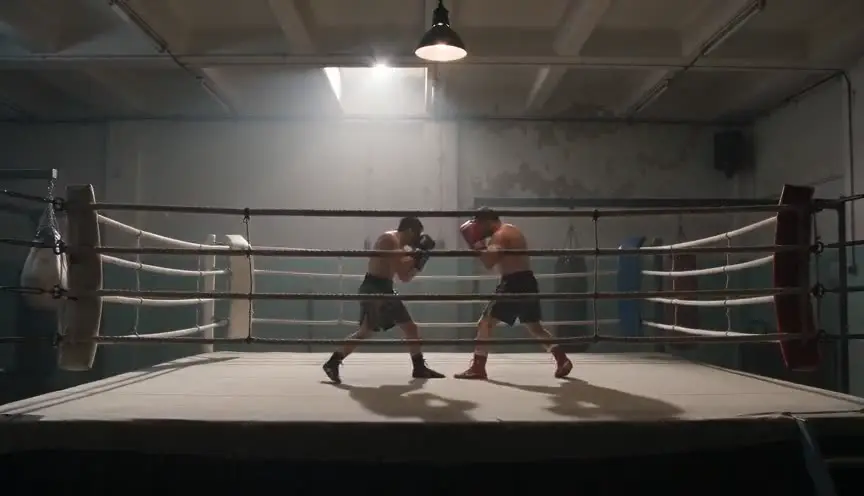
Cinematic workflow frames

这两张视觉素材需要配对使用:第一张展示的是Cinematic workflow still, first angle, 35mm film grain(电影级工作流静帧,第一视角,35mm胶片颗粒感),第二张切换到Cinematic workflow still, second angle, 35mm film grain(电影级工作流静帧,第二视角,35mm胶片颗粒感)——简短对比这两个角度,然后继续推进叙事。

What A/V Format Actually Looks Like
A standard A/V script divides the page into two columns:
Left column: VIDEO. This describes everything the audience sees. Camera angles, shot compositions, on-screen text, actor actions, visual effects. Written in present tense, usually in capital letters or standard sentence case depending on agency style.
Right column: AUDIO. This section captures the complete sonic landscape—every element the audience will hear. It encompasses spoken dialogue, voiceover narration, musical cues and transitions, ambient sound effects, and often includes precise timing annotations to ensure synchronization.
The two columns run in parallel, creating a unified reading experience. The reader can trace picture and sound simultaneously, line by line, understanding exactly how visual action and audio elements sync at each moment.
A sample A/V script might look like this:
| VIDEO | AUDIO |
|---|---|
| OPEN on a kitchen. Morning light streams through the window. A WOMAN (30s) pours coffee into a ceramic mug. | (SFX: Coffee pouring, liquid hitting cup) |
| She takes a sip, savoring the warmth. Smiles contentedly. | (MUSIC: Warm acoustic guitar begins, gentle fingerpicking) |
| CUT TO: Same woman at her desk. Laptop open, screen glowing. She types confidently, focused on her work. | VO: "Every morning deserves a great start." |
| SUPER: "Sunrise Coffee. Wake up to better." | VO: "Sunrise Coffee. Wake up to better." 这一行同时标注了画面上叠加的字幕文本与旁白台词,两者措辞完全一致,形成视听强化。 这一行同时标注了画面上叠加的字幕文本与旁白台词,两者措辞完全一致,形成视听强化。 |
| Logo appears. Product shot beside the logo. | (MUSIC: Button) 此处视觉呈现品牌标识与产品静物并置构图,音频层则用一记按钮音效作为结束标点。 此处视觉呈现品牌标识与产品静物并置构图,音频层则用一记按钮音效作为结束标点。 |
Notice several things: the visuals are spare but specific. The audio cues include SFX (sound effects), MUSIC, VO (voiceover), and SUPER (superimposed text). Everything is timed to fit thirty seconds. 注意这些细节:画面精简却指向明确,音频标注涵盖 SFX(音效)、MUSIC(配乐)、VO(旁白)与 SUPER(叠加字幕)四类元素,全部编排需严格卡在 thirty seconds 时长内。 注意这些细节:画面精简却指向明确,音频标注涵盖 SFX(音效)、MUSIC(配乐)、VO(旁白)与 SUPER(叠加字幕)四类元素,全部编排需严格卡在 thirty seconds 时长内。
Why A/V Instead of Screenplay Format?
Commercials serve a different master than films. The client, the brand paying for the spot, needs to approve every element before production. They don't read screenplays fluently; they need to see exactly what's happening on screen and exactly what's being said. 广告片服务的对象与电影截然不同:出资购买时段的客户、品牌方必须在开拍前审批每一个元素,他们并不习惯流畅阅读剧本散文,而是需要准确看到屏幕将呈现什么画面、台词将说出什么内容。 广告片服务的对象与电影截然不同:出资购买时段的客户、品牌方必须在开拍前审批每一个元素,他们并不习惯流畅阅读剧本散文,而是需要准确看到屏幕将呈现什么画面、台词将说出什么内容。
A/V format provides that clarity. The client can scan the VIDEO column and see every image. They can scan the AUDIO column and see every word. Nothing is buried in prose. Nothing is ambiguous. A/V 格式正是为此种透明度而设计:客户扫视 VIDEO 栏即可看见每一帧画面,扫视 AUDIO 栏即可看见每一句台词,没有任何信息被埋进散文叙述,没有任何元素存在歧义空间。 A/V 格式正是为此种透明度而设计:客户扫视 VIDEO 栏即可看见每一帧画面,扫视 AUDIO 栏即可看见每一句台词,没有任何信息被埋进散文叙述,没有任何元素存在歧义空间。
This A/V script format also serves production workflows directly. The director can reference their blocking notes, the DP can plan shots from the VIDEO column, the editor can assemble cuts according to the picture descriptions, and the sound designer can build the mix from the AUDIO column specifications. Because synchronization is embedded into the document structure itself, every department works from a shared timeline without needing separate call sheets or technical breakdowns.
A/V format isn't less creative than screenplay format—it's more transparent about execution, which is precisely what advertising production demands. The format makes production intent visible at the script stage, reducing ambiguity between creative concept and final deliverable.
The Anatomy of a 30-Second Spot
Thirty seconds is simultaneously very short in absolute duration and precisely structured in its internal architecture. Most commercials, regardless of product category or target demographic, follow a recognizable dramatic pattern that maximizes message retention within severe time constraints:
0:00–0:05 , The Hook
You have five seconds maximum to stop the viewer from skipping the ad or looking away from the screen. This opening beat is usually constructed from a striking visual image, a provocative question that creates cognitive tension, or a moment of immediate personal relevance to the target audience. "You" language often appears in this section to establish direct address: "You've tried everything..." or "You know that feeling when..."
0:05–0:20 , The Body
The core message occupies the middle segment. This is where the product or service is introduced by name, demonstrated in a usage scenario, or explained through benefit-focused narration. Visuals show the product in action or illustrate the tangible benefit it delivers to the user. Voiceover delivers the value proposition in clear, benefit-driven language that connects product features to audience needs.
0:20–0:25 , The Pivot
The emotional turn. This is where the message becomes personal or aspirational. "Imagine a morning where..." or "Now you can..."
0:25–0:30 , The Tag
The brand moment. Logo, tagline, call to action. This is what the viewer is meant to remember. Often accompanied by a musical "button", a short, memorable sting.
Not every commercial follows this structure exactly, but most do. The constraint of thirty seconds imposes discipline.
Writing the VIDEO Column
The VIDEO column describes images, not cinematography. You're not directing, you're conveying what the viewer sees so that everyone (client, director, editor) shares a vision.
Be specific but not over-technical. Write "CU on her hands as she opens the box" rather than "50mm lens, shallow depth of field, dolly push." The director makes technical choices; you make visual choices.
Use standard abbreviations. CU (close-up), WS (wide shot), MS (medium shot), ECU (extreme close-up), POV (point of view). These shorthand notations are universally recognized and understood across the industry, ensuring clear communication between directors, cinematographers, and production teams.
Indicate supers. Any on-screen text is a SUPER (superimposition). Write it exactly as it should appear, maintaining precise formatting and punctuation: "SUPER: '50% more effective.'" This ensures the graphics team reproduces the text accurately.
Describe action in present tense. "She opens the door. Sees the surprise. Her face lights up." This active voice creates immediacy and helps readers visualize the scene as it unfolds in real time. This active voice creates immediacy and helps readers visualize the scene as it unfolds in real time.
Include transitions. CUT TO, DISSOLVE TO, FADE TO BLACK. These technical instructions help the reader understand pacing, rhythm, and the intended flow between scenes, guiding both editorial decisions and viewer experience.
Once the VIDEO column is agreed, it becomes the spine of the commercial storyboard, where each line gets a panel, a duration in seconds, and the super typed out underneath it.
Writing the AUDIO Column
The AUDIO column contains everything heard: dialogue, VO (voiceover), SFX (sound effects), and MUSIC cues. This comprehensive audio breakdown ensures sound designers and editors have complete information about the sonic landscape of each scene. This comprehensive audio breakdown ensures sound designers and editors have complete information about the sonic landscape of each scene.
Voiceover is king. Most commercials rely on voiceover to deliver the message. Write VO dialogue tight, every word counts. Read it aloud. Time it. If you write eighty words for a thirty-second spot, it won't fit.
Dialogue is rare but impactful. If characters speak on screen (not VO), mark it clearly with the character name. "WOMAN: 'Finally, a coffee that doesn't taste like regret.'"
Music cues are tonal directions. You don't need to specify a song; you specify a feel. "MUSIC: Upbeat indie pop, building energy." The music supervisor handles licensing.
Sound effects add texture. "SFX: Door slam. Coffee pouring. Keyboard typing." These are listed as they sync with visuals.
The button matters. Most commercial music ends with a "button", a short musical punctuation that signals the end. Indicate it: "MUSIC: Button."

Word Count and Timing: The Math You Need to Know
Average speaking pace for commercials: 2.5–3 words per second for comfortable delivery. Faster feels rushed; slower feels languid.
30 seconds of VO: Maximum 75–90 words. Realistically, 60–75 if there's music and pauses.
15 seconds of VO: Maximum 35–45 words.
Music and SFX reduce word budget. If your spot opens with five seconds of music-only, you've lost fifteen words. Budget accordingly.
Supers compete with VO. If there's text on screen while someone's talking, the viewer has to split attention. Either simplify the super or pause the VO.
Here's a sample word budget for a 30-second spot:
| Section | Duration | Word Budget |
|---|---|---|
| Hook (visual-driven, minimal VO) | 5 sec | 10 words |
| Body (product message) | 15 sec | 40 words |
| Pivot (emotional turn) | 5 sec | 15 words |
| Tag (logo + tagline) | 5 sec | 10 words |
| Total | 30 sec | 75 words |
Try it free
Try 熙熙 for free on your script
It is free. Import your existing project, get a clearer view of your outline, and regain control of your story structure in minutes.
Start FreeThree Scenarios: Different Commercial Types
Scenario A: Product Demo
A cleaning product that removes stains. The spot shows before/after demonstrations.
VIDEO column: Heavy emphasis on product demonstration shots throughout the sequence. Close-up framing on the stain itself to establish the problem. Product is applied directly to the stained area. Stain visibly disappears within the frame. Before/after split screen comparison shown side-by-side to reinforce the transformation.
AUDIO column: Voice-over narrator explains the core product benefit in clear, direct language. Example script: "Watch the toughest stains vanish in seconds." Background music remains upbeat and energetic but deliberately mixed low enough not to distract from the voice-over messaging.
Key creative challenge: Making the product demonstration visually interesting and engaging without the execution feeling like a traditional infomercial or low-budget direct-response spot.
Scenario B: Emotional Brand Spot
A car brand strategy focused on selling not the physical vehicle itself but the intangible emotional experience—the feeling of freedom, the spirit of adventure, the warmth of family connection on the open road.
VIDEO column: Cinematic landscape imagery dominates the visual storytelling. A family is shown driving together through sweeping mountain terrain. Kids are captured laughing and playing in the backseat, genuine moments of joy. Golden-hour sunset lighting bathes the scenes. Minimal direct product shots of the vehicle until the final brand tag at the end.
AUDIO column: VO is sparse or absent. Music does the emotional work. If there's VO, it's philosophical: "The road doesn't care where you've been. Only where you're going."
Key challenge: Making the brand feel earned——让品牌调性显得自然而非硬贴。情感必须与产品本身形成有机连接,一旦脱节,整支广告就会沦为空洞的影像拼贴。观众能迅速察觉真诚与造作之间的差异,这是成败的分水岭。
Scenario C: Humor/Disruption
A snack brand using absurdist humor to stand out. The concept is that the snack is so good, it makes people act ridiculous. 品牌选择荒诞喜剧作为差异化手段,核心创意在于零食美味到令人失去理智、做出夸张举动,用超现实反应放大产品吸引力。 品牌选择荒诞喜剧作为差异化手段,核心创意在于零食美味到令人失去理智、做出夸张举动,用超现实反应放大产品吸引力。
VIDEO column: Setup appears normal——办公室场景、会议室氛围,一切看似日常。有人打开这款零食的瞬间,秩序瓦解。人们扑向零食、争抢画面、夸张的肢体语言和面部表情充斥镜头,反差成为视觉笑点的核心驱动力。
AUDIO column: Dialogue is comedic. "Is that... is that a FlavorBlast?" SFX for absurd punctuation, boing, record scratch. Music shifts from corporate to silly.
Key challenge: Landing the joke in thirty seconds. Setup must be instant; payoff must be clear.
The "Trench Warfare" Section: What Goes Wrong
Failure Mode #1: Too Many Words
The writer packs 100 words into thirty seconds. The VO sounds rushed. The message is lost.
How to Fix It: Time your script. Read aloud with a stopwatch. If it doesn't fit, cut words, not speed.
Failure Mode #2: Unclear Visual Logic
The VIDEO column jumps between unrelated images. The viewer can't follow the story.
How to Fix It: Every image should connect to the previous one. Cause and effect. Question and answer. Progression, not randomness.
Failure Mode #3: Buried Call to Action
The spot carries genuine charm and visual appeal, yet it leaves the viewer stranded without a clear path forward. There's no website URL to visit, no product name to remember, and no compelling reason that would motivate immediate action or follow-through.
How to Fix It: The tag exists for a reason. Make the CTA clear: logo, tagline, URL or action prompt.
Failure Mode #4: Mismatched Tone
The visuals deliver warmth and authentic emotional resonance; meanwhile, the voiceover arrives corporate, rigid, and overly stiff in tone. The resulting spot feels internally schizophrenic, as if two separate creative teams worked in isolation without ever speaking to one another.
How to Fix It: Approach VIDEO and AUDIO as a single, unified creative experience from the very first draft. Both elements should feel like they belong to the same commercial, sharing tone, pacing, and emotional intent throughout.
Failure Mode #5: Ignoring Client Language
The client has mandatory legal copy that must appear verbatim ("Offer valid through December 31"). The writer overlooks or sidesteps this requirement entirely. The script gets rejected during legal review, forcing expensive revisions.
How to Fix It: Secure all mandatories upfront during the brief stage. Build them directly into your total word budget from the beginning. These elements are non-negotiable and must be integrated seamlessly, not tacked on as an afterthought.

Client Rounds: How the Script Evolves
Commercial scripts typically go through multiple revision rounds before final production. Here's how the typical process unfolds:
Round 1: Internal creative review. The agency's creative team collaborates to refine and polish the script internally before presenting it to the client.
Round 2: Client presentation. The client's brand team reviews the script and provides feedback notes, which often address messaging strategy, tone of voice, legal considerations, or brand alignment requirements.
Round 3: Revisions. The writer incorporates client notes and implements changes. Some notes are creative in nature ("Make it funnier"), while others are mandatory requirements ("Add the disclaimer").
Round 4: Legal review. Legal and compliance teams review all claims made in the script. Claims like "50% more effective" require substantiation with data. Superlative statements such as "The best coffee" might need to be adjusted to comparative language like "A better coffee."
Round 5: Pre-production script. The final approved script goes to production. Any further changes require new approvals. If production means generating the spot rather than shooting it, the AI commercial workflow picks up from this exact document. This stage locks in creative decisions and serves as the technical blueprint for either live-action filming or AI-generated video production, ensuring consistency between approval and execution. This stage locks in creative decisions and serves as the technical blueprint for either live-action filming or AI-generated video production, ensuring consistency between approval and execution.
A/V format helps this process because changes are easy to track. A client can say "I don't like the visual at 0:15" and everyone knows exactly what they mean. This precision eliminates ambiguity in feedback rounds, allowing stakeholders to reference specific moments without lengthy explanations or misunderstandings about which scene or line is being discussed. This precision eliminates ambiguity in feedback rounds, allowing stakeholders to reference specific moments without lengthy explanations or misunderstandings about which scene or line is being discussed.
The Perspective: Constraints Are Creative
Thirty seconds is not a limitation. It's a discipline.
Every great commercial writer learns to love the constraint. Because when you can't sprawl, you must choose. Every word is deliberate. Every image is intentional. The result, when it works, is a piece of communication that lands instantly and stays in memory. Tight time limits and narrow formats don't limit creativity—they sharpen it, forcing writers to distill messages to their most potent form and eliminate anything that doesn't directly serve the core idea. Tight time limits and narrow formats don't limit creativity—they sharpen it, forcing writers to distill messages to their most potent form and eliminate anything that doesn't directly serve the core idea.
A/V format supports this discipline. By separating picture and sound, it forces you to justify each element. Does this image earn its place? Does this word earn its place? If not, cut it. This structural separation creates a natural checkpoint where writers and directors must evaluate whether visual and auditory components reinforce each other or merely occupy space, leading to tighter, more purposeful creative work. This structural separation creates a natural checkpoint where writers and directors must evaluate whether visual and auditory components reinforce each other or merely occupy space, leading to tighter, more purposeful creative work.
Screenwriters who move into commercials often find it clarifying. The habits they develop, economy, precision, visual thinking, make their longer-form work better too. The discipline of condensing a story into seconds without losing emotional impact or narrative clarity translates directly back to feature scripts and episodic writing, where pacing and concision elevate audience engagement even when runtime constraints are less severe. The discipline of condensing a story into seconds without losing emotional impact or narrative clarity translates directly back to feature scripts and episodic writing, where pacing and concision elevate audience engagement even when runtime constraints are less severe.
Thirty seconds isn't small. It's concentrated. And concentration, in any medium, is craft.
[YOUTUBE VIDEO: A commercial writer walking through an A/V script from concept to final production, showing how the document evolved through client rounds and what changed between script and finished spot.]
Further reading:
- For guidance on writing sizzle reels and rip-o-matics (which share A/V format conventions), see rip-o-matics and sizzle reels to sell tone.
- If you're writing longer-form branded content, our pitch deck template covers how to structure visual presentations.
- The Association of National Advertisers has resources on commercial production standards at ana.net{:rel="nofollow"}.
Final Step
Build your next script with 熙熙
Move from ideas to production-ready pages faster with timeline-native writing and AI-assisted story flow.
Try 熙熙